
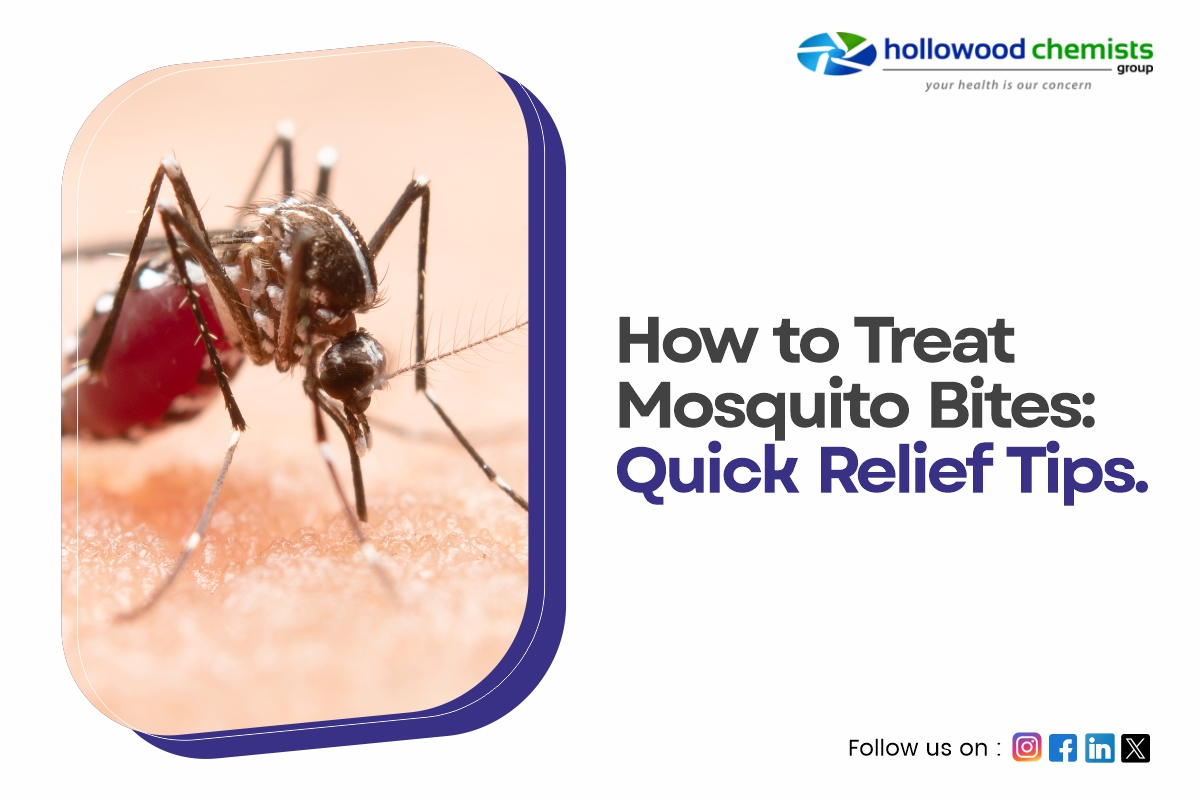
How to Treat Mosquito Bites: Quick Relief Tips and Remedies
Mosquito bites are a common nuisance during the warmer months and while travelling abroad. Most bites are harmless and settle within a few days, but the itching, redness and swelling can be uncomfortable. In some cases, mosquito bites can become infected or trigger an allergic reaction, requiring medical advice.
At Hollowood Chemists, our pharmacists provide expert advice on insect bite treatment through our Pharmacy First service, recommend suitable over-the-counter medicines, and offer travel health services to help you prevent mosquito bites before your next holiday.
What Causes Mosquito Bites?
Mosquitoes bites by piercing the skin with their mouthparts to feed on blood. During this process, they inject saliva into the skin, which triggers your immune system. This reaction causes the familiar symptoms of itching, redness and swelling.
The severity of a bite varies from person to person. While some people develop only a small itchy bump, others may experience a large swollen mosquito bite, blistering or an allergic reaction.
Mosquito bites are more common during:
- Warm summer evenings
- Holidays in tropical or subtropical countries
- Outdoor activities near lakes, rivers or woodland
- Areas with standing water where mosquitoes breed
Although mosquitoes in the UK rarely spread serious diseases, bites acquired abroad may carry a higher risk of illnesses such as malaria or dengue fever. If you’re travelling overseas, seeking travel clinic mosquito advice before departure is recommended.
Can Mosquito Bites Spread Disease?
Although mosquito bites in the UK rarely transmit disease, bites acquired overseas can spread serious infections including:
- Malaria
- Dengue fever
- Chikungunya
- Zika virus
- Yellow fever
- Japanese encephalitis
Travellers should seek travel health advice before visiting affected countries.
Travel Vaccinations & Medicine Clinic
Common Insect Bites and Stings
Mosquitoes are just one of several insects that can bite or sting. Understanding the difference can help you choose the most appropriate treatment.
Common insect bites and stings include:
- Mosquito bites – itchy, raised red bumps that usually appear within minutes.
- Flea bites – small, itchy spots often found around the ankles or lower legs.
- Midge bites – tiny, intensely itchy bites that often occur in groups.
- Bee or wasp stings – painful stings that can cause immediate swelling and redness.
While most insect bites improve without treatment, severe swelling, signs of infection, or allergic reactions should always be assessed by a healthcare professional.
Mosquito Bite Symptoms
Typical mosquito bite symptoms include:
- Itchy mosquito bites
- Small raised red bumps
- Mild swelling around the bite
- Warmth or tenderness
- A small central puncture mark
Some people may experience:
- A painful mosquito bite
- Large mosquito bite swelling
- A mosquito bite rash
- Blistered mosquito bites
- Multiple bites across exposed areas of skin
Children and people with sensitive skin may experience a stronger inflammatory response, resulting in more noticeable swelling.
Immediate Relief for Mosquito Bites
If you’ve recently been bitten, acting quickly can reduce itching and swelling.
Wash the Area
Clean the bite gently with soap and cool water to reduce the risk of infection and remove any irritants from the skin.
Apply a Cold Compress
An ice pack for mosquito bites can help reduce swelling, numb the area and provide fast mosquito bite itching relief.
Wrap ice in a clean cloth and apply it for around 10–15 minutes. Never place ice directly onto the skin.
Avoid Scratching
Scratching may feel satisfying temporarily but can damage the skin, increase inflammation and allow bacteria to enter, leading to a mosquito bite infection.
Keeping fingernails short and avoiding repeated scratching can significantly reduce this risk.
Read: How to Treat Mosquito Bites: Quick Relief Tips and Remedies
Mosquito Bite Treatment
Most mosquito bites improve within a few days, but treatment can make symptoms much more comfortable.
Anti-Itch Creams and Gels
An effective mosquito bite cream may help calm itching and reduce skin irritation.
Your pharmacist may recommend products such as:
- Hydrocortisone cream (where appropriate)
- Bite relief creams
- Cooling gels
- Calamine lotion for soothing irritated skin
These treatments can help relieve discomfort, particularly if the itching is interfering with sleep or daily activities.
Always follow the product instructions and speak with a pharmacist if you’re unsure which treatment is suitable.
Antihistamines for Allergic Reactions
If itching is severe or multiple bites are causing discomfort, an oral antihistamine for mosquito bites may be appropriate.
A mosquito bite antihistamine works by reducing the body’s allergic response to mosquito saliva, helping relieve itching and swelling.
Antihistamines may be particularly helpful if:
- You have several mosquito bites.
- The swelling is more widespread.
- Symptoms are affecting your sleep.
Your pharmacist can advise which antihistamine is suitable based on your age, medical history and any other medicines you take.
Pain Relief Medication
Although itching is the most common symptom, some people experience tenderness or pain from insect bites.
If required, simple pain relief medicines such as paracetamol or ibuprofen may help ease discomfort. These should be taken according to the patient information leaflet and may not be suitable for everyone.
Swollen Mosquito Bite Treatment
A swollen mosquito bite is usually caused by your body’s immune response rather than an infection.
To reduce swelling:
- Apply a cold compress.
- Keep the affected area elevated where possible.
- Use an appropriate antihistamine if recommended by your pharmacist.
- Apply an anti-inflammatory cream if suitable.
Swelling often improves within a few days without further treatment.
However, if swelling continues to worsen, spreads significantly or is accompanied by fever or increasing pain, seek medical advice promptly.
Read: Itchy, Swollen or Infected? Best Treatment Options for Insect Bites
Infected Mosquito Bite Treatment
Although uncommon, scratching can allow bacteria to enter the skin and cause a secondary bacterial infection.
Possible signs of a mosquito bite infection include:
- Increasing redness around the bite
- Swelling that continues to worsen
- Warm or hot skin
- Pus or fluid leaking from the bite
- Increasing pain
- Fever or feeling generally unwell
An infected mosquito bite treatment may require assessment by a pharmacist, GP or NHS service. In some cases, prescription antibiotics may be necessary.
At Hollowood Chemists, our pharmacists can assess minor skin conditions, advise whether pharmacy treatment is appropriate and recommend when further medical assessment is needed.
Pharmacy Treatment for Mosquito Bites
Many people search for a mosquito bite pharmacy treatment because pharmacists are often the quickest healthcare professionals to access for minor conditions.
Visiting a pharmacy for mosquito bites allows you to receive personalised advice without waiting for a GP appointment.
At Hollowood Chemists, our experienced pharmacy team can help you choose suitable treatments for:
- Itchy mosquito bites
- Painful or swollen bites
- Mild allergic skin reactions
- Bite relief creams and antihistamines
- Advice on preventing insect bites during future travel
We also provide travel health pharmacy services, including travel vaccinations, destination-specific advice and guidance on malaria prevention tablets for eligible travellers heading to higher-risk destinations.
Mosquito Bites vs Midge Bites: How to Tell the Difference
Mosquito and midge bites can look similar, but there are a few key differences that may help you identify the cause.
| Feature | Mosquito Bites | Midge Bites |
| Appearance | Raised, round red bump | Small red spots, often in clusters |
| Itching | Mild to moderate | Often very intense |
| Pain | Usually painless when bitten | Can feel sharp or irritating |
| Common Location | Exposed skin such as arms, legs and face | Ankles, legs, arms and neck |
| Swelling | Mild to moderate, sometimes larger in sensitive individuals | Usually smaller but may become inflamed after scratching |
Both mosquito and midge bites usually settle within a few days. However, persistent swelling, worsening redness or signs of infection should be assessed by a healthcare professional.
How to Prevent Mosquito Bites
Prevention is often the most effective way to avoid discomfort, particularly when travelling abroad or spending time outdoors during warmer weather.
Use an Effective Insect Repellent
Choose the best mosquito repellent product containing DEET 50% or another recommended active ingredient. Apply it according to the manufacturer’s instructions, especially during the evening when mosquitoes are most active.
Wear Protective Clothing
If you’re spending time outdoors:
- Wear long sleeves and full-length trousers.
- Choose light-coloured clothing where practical.
- Cover exposed skin, particularly around dawn and dusk.
Reduce Exposure
Mosquitoes are attracted to standing water, so avoid spending long periods near ponds, marshes or other areas where they breed whenever possible.
Protect Your Accommodation
When travelling:
- Keep windows closed where possible.
- Use mosquito screens or nets.
- Sleep under a treated mosquito net if recommended for your destination.
These simple steps can significantly reduce your risk of insect bites on holiday.
When to Visit a Pharmacist or GP
Most mosquito bites can be managed at home, but some situations require professional advice. Visit Hollowood Chemists nearest branch today or explore our online services to learn how our pharmacy first service can help you manage insect bites and other minor ailments. Our pharmacists are always available to provide expert care tailored to your needs.
Visit a pharmacist if:
- The itching is severe or affecting your sleep.
- You need advice on a suitable mosquito bite cream or oral antihistamines.
- The bite remains swollen after several days.
- You’re unsure whether your symptoms are normal.
- You would like advice on insect bite treatment or preventing future bites.
Contact your GP or seek urgent medical advice if:
- The bite appears infected with increasing redness, warmth or pus.
- You develop a fever or feel generally unwell.
- Swelling continues to worsen or spread significantly.
- You experience symptoms of a severe allergic reaction, such as difficulty breathing, swelling of the face or throat, or dizziness. Call 999 immediately if these symptoms occur.
- You become unwell after returning from a country where mosquito-borne illnesses such as malaria are present.
Early assessment can help prevent complications and ensure appropriate treatment if required.
Final Thoughts
Mosquito bites are usually mild, but prompt treatment can help relieve itching, reduce swelling and lower the risk of infection. Knowing how to care for a bite, and when to seek professional advice, can make recovery quicker and more comfortable.
If you’re looking for trusted mosquito bite treatment in the UK, advice on insect bite treatment, or guidance before travelling abroad, Hollowood Chemists is here to help. Our experienced pharmacists can recommend suitable over-the-counter treatments, provide personalised travel health advice and support you with travel vaccinations, malaria prevention tablets, and practical mosquito bite prevention tips for your destination.
Whether you need help managing a bite at home or preparing for your next trip, visit your nearest Hollowood Chemists pharmacy for expert, friendly advice.
Frequently Asked Questions
-
How do you treat mosquito bites?
Most mosquito bites improve within a few days. Washing the area, applying a cold compress and using an anti-itch cream or antihistamine can help relieve itching and swelling. Avoid scratching, as this increases the risk of infection.
-
Why Do Mosquito Bites Itch?
Mosquito Saliva -> Histamine release -> itch
-
How Long Do Mosquito Bites Last?
- itch 1–3 days
- swelling 3–7 days
- larger local reactions up to 10 days
-
What helps mosquito bites stop itching?
A cold compress, calamine lotion, hydrocortisone cream (where appropriate) and oral antihistamines may help reduce itching. Your pharmacist can recommend the most suitable treatment based on your symptoms.
-
What is the fastest way to treat a mosquito bite?
Applying a cold compress soon after the bite is one of the quickest ways to reduce swelling and discomfort. Using an appropriate bite relief cream or antihistamine may also provide faster symptom relief.
-
Can antihistamines help mosquito bites?
Yes. Oral antihistamines may help reduce itching and swelling caused by your body’s allergic response to mosquito saliva. They can be particularly useful if you have multiple bites or more significant swelling.
-
Why Do Some People Get Bitten More Than Others?
- body heat
- carbon dioxide
- pregnancy
- alcohol
- genetics
- blood group (evidence mixed)
- darker clothing`
This article is intended for educational purposes only and does not replace personalised medical advice. Always speak to a qualified healthcare professional before starting or changing any weight-loss treatment.
References
-
- NHS – Insect Bites and Stings
- NHS – Allergic Reactions (Anaphylaxis)
- TravelHealthPro (UK)
- UK Health Security Agency (UKHSA) – Travel Health Advice
- NICE Clinical Knowledge Summary – Insect Bites and Stings
- NHS – Insect Bites and Stings