Hollowood Chemists

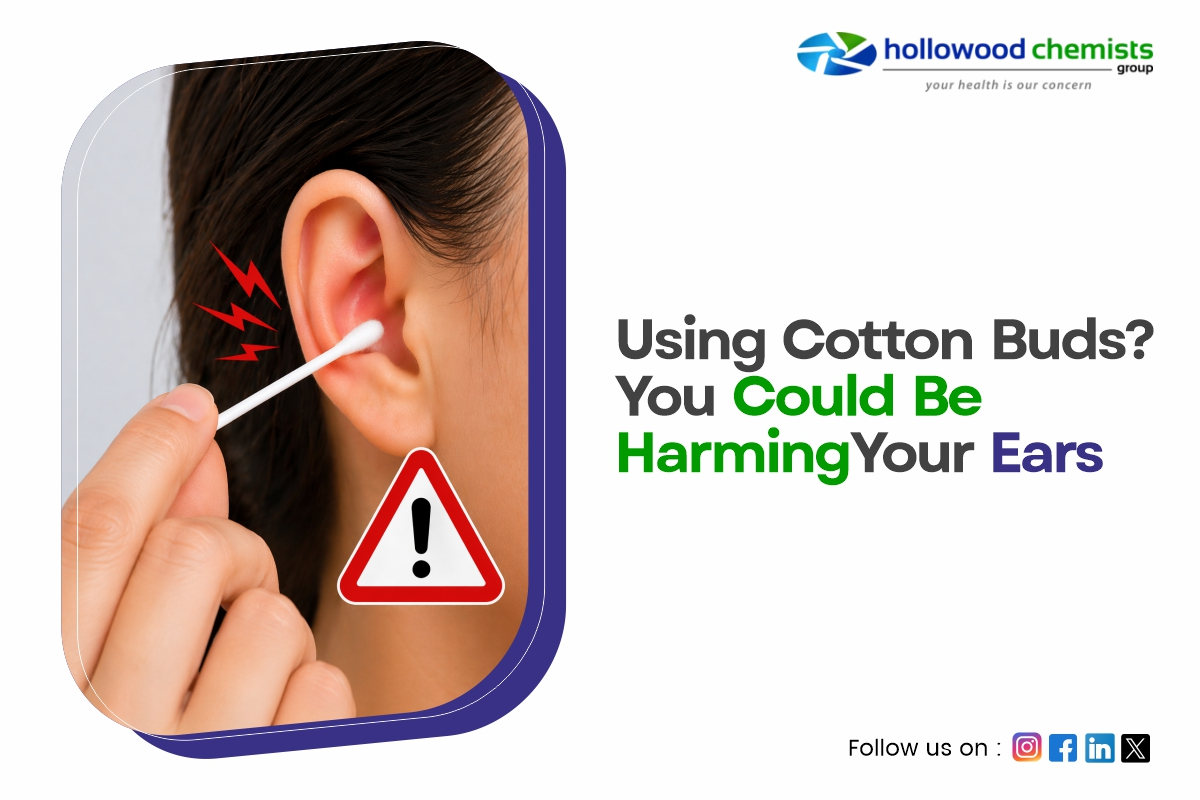
Using Cotton Buds? You Could Be Harming Your Ears

Cotton Buds Are Damaging Your Ears, Here’s What to Do Instead

Cotton Buds Are Damaging Your Ears, Here’s What to Do Instead

It is one of those habits that feels completely harmless and makes your ears feel clean. You step out of the shower, reach for a cotton bud, and give your ears a quick clean. Millions of people in the UK do exactly this every day. The problem is, according to the NHS, ENT UK, and many other major hearing organisations in the country, it can do more harm than good. 

This article explains why cotton buds cause more harm than good, what actually happens inside your ear canal when you use one, and,  critically,  what you should do instead if your ears feel blocked, itchy, or muffled.

Why Do People Use Cotton Buds to Clean Their Ears?

The answer is largely cultural. Earwax has long been perceived as something dirty,  a sign that the ears need a good clean. Cotton buds are cheap, widely available, and packaged in a way that implies they are designed precisely for this purpose. When you run one around the entrance to your ear canal and pull it out coated in dark wax, it genuinely looks as though it has worked.

The reality is quite different. Earwax or cerumen is not a sign of dirtiness. It is a natural, protective secretion produced by glands in the outer ear canal. It traps dust and foreign particles, carries mild antibacterial properties, and lubricates the delicate skin lining of the canal. In most people, it migrates outwards on its own through the ordinary movement of the jaw whilst chewing and speaking. The ears are, in most circumstances, entirely self-cleaning. Interfering with that process does not help,  it disrupts it. Ear Wax Removal service

The Hidden Dangers of Cotton Buds: What Really Happens Inside Your Ear

When a cotton bud is inserted into the ear canal, it does not scoop out wax,  it compresses and pushes it deeper towards the eardrum. Hull University Teaching Hospitals NHS Trust is explicit in its patient guidance: cotton buds push wax further down the ear canal, leading to impaction, and the cotton portion of the bud can detach and lodge inside the canal, causing infection. Here is what can go wrong:

  1. Wax impaction. Rather than clearing blockages, cotton buds pack wax harder against the eardrum, making the build-up significantly more difficult to remove and transforming a minor issue into one requiring professional treatment.
  2. Eardrum perforation. The eardrum sits just 2.5 cm inside the ear canal,  closer than most people realise. Inserting a cotton bud, particularly when distracted or startled, risks puncturing this delicate membrane. A perforated eardrum causes sharp pain, hearing loss, and can lead to serious middle-ear infections.
  3. Ear canal infection (otitis externa). Scratching the lining of the ear canal,  even microscopically, creates entry points for bacteria and fungi. Guy’s and St Thomas’ NHS Foundation Trust identifies cotton bud use as a primary cause of otitis externa, the painful outer ear infection often called swimmer’s ear.
  4. Increased wax production. The ear’s response to foreign object intrusion is to produce more wax. Using cotton buds regularly can actually cause the very build-up you are trying to prevent.
  5. Cotton fibre retention. Fibres from the bud can detach and accumulate inside the canal, contributing to blockages, chronic irritation, and inflammation.

According to ENT UK and NHS data cited by Hearology, thousands of people in the UK require treatment every year for ear injuries caused by cotton buds, including scratched canals and perforated eardrums, with children and older adults at particular risk. It is why cotton bud packaging in the UK is required to carry the instruction: “do not insert into the ear canal.” Most people never read it.

Book an Ear Wax Removal Appointment at Hollowood Chemists

Ear Wax Removal Across North West England: Serving Your Community

If you are looking for ear wax removal near me in the North West UK, whether you need a walk-in ear wax removal pharmacy, a same-day earwax removal appointment, or want to find a private ear wax removal clinic without a lengthy NHS wait, Hollowood Chemists has you covered across the region.

We provide safe and effective microsuction earwax removal to patients across North West England, including:

Download the Complete List of Our Pharmacies

Safe and Effective Microsuction Ear Wax Removal: The Professional Solution

When professional earwax removal is required, microsuction is the method most widely recommended by audiologists and ENT specialists across the UK. It is a dry and highly precise procedure, performed under direct visualisation using a fine, low-pressure suction probe alongside an illuminated magnifying scope-eliminating the need for water and reducing uncertainty during treatment.

In the North West of England, Hollowood Chemists also offer private earwax removal services using microsuction, providing a safe, clinically guided option for patients seeking prompt and effective care.

Microsuction carries a wide eligibility range compared to other ear wax removal methods. Metal syringe method (ear syringing) was removed from NICE guidance in 2018 due to the risk of eardrum perforation and modern electronic ear irrigation still l cannot be used in patients with perforated eardrums or histories of ear surgery. With microsiction, the clinician sees the ear canal throughout, which means nothing is ever removed blindly.

Ear Wax Removal Aftercare

Following microsuction, mild temporary dizziness or a brief sense of canal sensitivity is normal and settles quickly. Keep the ear dry for 24 to 48 hours where possible, avoid swimming, and if you wear hearing aids, allow a short adjustment period as your hearing recalibrates. If you experience significant pain, ongoing dizziness, or any discharge after the procedure, contact your pharmacist or GP.

Professional Ear Care Without the Wait

Clinically safe microsuction by trained healthcare professionals, delivering trusted ear care across North West England.


What Should You Do Instead? Safe Alternatives for Ear Cleaning

For the vast majority of people, the ears simply do not need cleaning. However, if wax has built up and is causing symptoms such as muffled hearing, a sense of fullness, tinnitus, earache, or dizziness, then there are safe options to try at home before seeking professional care.

Step 1: Olive Oil Ear Drops

Medical-grade olive oil, available from any pharmacy as a spray or drop is the first-line recommendation from NHS Inform and BSW ICB commissioning guidance for softening ear wax.

Apply two to three drops or one to two sprays into the affected ear, twice daily, for up to two weeks. This softens and loosens the wax, helping the ear to expel it naturally. Sodium bicarbonate ear drops are also available and are effective at breaking down harder wax, though they should only be used for two to three weeks at a time as they can occasionally dry out the canal lining.

Step 2: Warm Water When Showering

Allowing a gentle flow of warm water from a shower into the outer ear whilst bathing can assist with natural wax migration. Never direct a pressurised jet into the canal. After washing, tilt your head to each side to allow water to drain, and let the ear dry naturally. Avoid inserting anything to dry the inside of the canal.

Step 3: Know When to Stop and Seek Help

If drops and warm water have not resolved your symptoms after two weeks, or if you have pain, discharge, or notable hearing loss, it is time for professional ear cleaning. Do not persist with home remedies beyond this point,  and under no circumstances try ear candles. There is no clinical evidence they work, and they carry a genuine risk of burns.

Also Read: Ear Wax Removal and Hearing Health

Why Choose Hollowood Chemists for Earwax Removal?

At Hollowood Chemists, our trained pharmacists deliver microsuction ear wax removal as part of our dedicated ear wax removal service across North West England including St Helens, Wigan, Bolton, Sale, Northwich, Crewe and Staffordshire. Every appointment starts with a brief clinical review and video otoscope examination,  so you can actually see the blockage on screen before treatment begins. The microsuction itself takes only a few minutes per ear and is, for the overwhelming majority of patients, entirely comfortable. In most cases, hearing improvement is immediate.

Our ear wax removal appointments do not require a GP referral, and same-day slots are often available. Whether you are a hearing aid user experiencing feedback and muffled sound, someone whose blocked ears have not responded to drops, or you simply want safe, fast ear cleaning from a qualified professional,  we are here to help.

Get Treatment

Frequently Asked Questions

Q1. Why are cotton buds bad for ears?

Cotton buds do not remove earwax,  they push it deeper into the ear canal, risking impaction against the eardrum. They can also scratch the delicate canal lining, cause infection, perforate the eardrum, and trigger the ear to produce even more wax. Every major UK health body, including the NHS and ENT UK, advises against inserting cotton buds into the ear canal.

Q2. How do I remove earwax blockage fast?

For fast, safe relief, start with olive oil drops twice daily for up to two weeks. If that does not resolve the blockage, microsuction at a professional ear wax removal clinic such as Hollowood Chemists is the quickest and safest option,  with same-day appointments often available across North West England.

Q3. Can earwax cause headaches?

Yes,  indirectly. Pressure from impacted wax against the eardrum can produce referred pain that radiates to the jaw, temples, and across the head. If you are experiencing unexplained headaches alongside any ear symptoms, have your ears assessed by a pharmacist or GP before exploring other causes.

Q4. Is microsuction safe for ear wax removal?

Yes. Microsuction is widely regarded as the safest professional method for earwax removal available in the UK. It is a dry procedure performed under direct visualisation, making it the preferred choice for patients who cannot have water-based irrigation,  including those with perforated eardrums, a history of ear surgery, or recurrent ear infections.

Q5. What drops are recommended for blocked ears?

Medical-grade olive oil spray (such as Earol) is the first-line NHS recommendation for softening ear wax. Sodium bicarbonate drops are also effective for harder wax. Neither should be used if you have a perforated eardrum. Ask your pharmacist if you are unsure which is appropriate for you.


Medical Disclaimer

This article is for informational purposes only and does not constitute medical advice. Always consult a qualified healthcare professional before starting, stopping, or combining any medications.

References


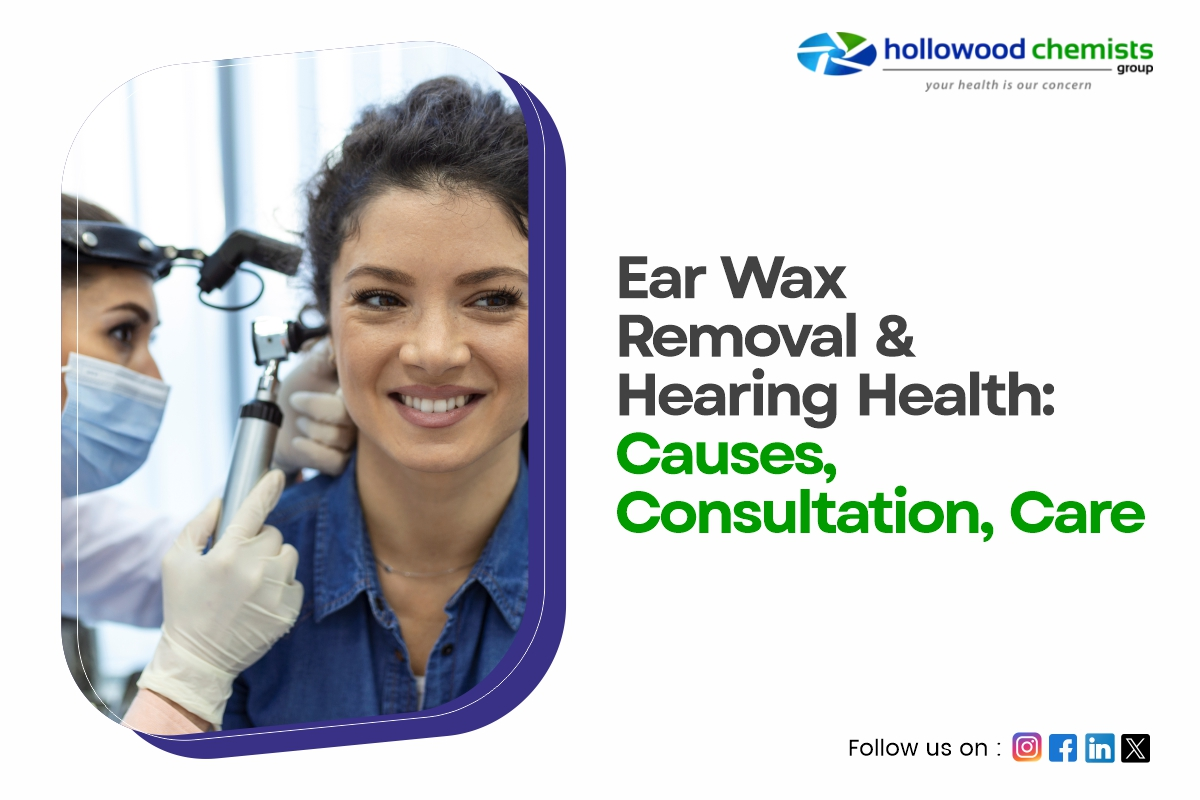
Ear Wax Removal and Hearing Health Causes, Consultation, Care

Ear Wax Removal and Hearing Health: What Causes Ear Wax Build-Up and When to See a Pharmacist

Ear Wax Removal and Hearing Health: What Causes Ear Wax Build-Up and When to See a Pharmacist

Muffled hearing, a feeling of fullness in the ear, or a persistent dull ache? If any of these sound familiar, the culprit is often something as straightforward as ear wax build-up. Cerumen, to give it its clinical name, is a completely natural substance and an essential part of your ear’s defence system. The problem arises when it accumulates faster than the ear can clear it on its own. At that point, it stops being protective and starts being problematic.

This guide covers what causes wax to build up in the first place, what symptoms to look out for, why home removal can cause more harm than good, and what a professional ear wax removal appointment actually involves,  with a particular focus on microsuction. This technique to remove ear wax requires specialist equipment, skill and is regarded as one of the safest and most precise methods of removing ear wax by audiologists and ENT specialists across the UK.

How Is Ear Wax Formed, and Why Does It Build Up?

Ear Wax (Cerumen) is produced by glands in the outer third of the ear canal. It serves a genuinely useful purpose: it traps dust and debris, has mild antibacterial properties, and lubricates the delicate skin lining the canal. Under normal circumstances, jaw movement, chewing and talking slowly migrates the wax outwards towards the outer ear where it dries and falls away naturally. You should, in theory, never need to clean inside your ears at all.

However, this natural migration can be disrupted. According to NHS and clinical guidance from Calderdale and Huddersfield NHS Foundation Trust, wax build-up is more likely in the following circumstances:

  • Narrow or unusually shaped ear canals, which slow the natural outward migration of wax.
  • Regular use of hearing aids, earbuds, or ear plugs, which physically block the canal exit and can push wax inwards.
  • Cotton bud use,  perhaps the most common cause of impacted wax, as buds tend to pack wax deeper against the eardrum rather than removing it.
  • Older age, as wax naturally becomes drier and harder to expel over time.
  • Dusty or dry working environments, which increase the volume of debris the ear has to manage.

Wax colour and consistency vary considerably between individuals,  ranging from pale honey to deep brown, and from soft and sticky to dry and flaky. None of these variations indicate a problem in themselves; it is only when accumulation becomes symptomatic that intervention is needed.

Recognising the Symptoms of Ear Wax Blockage

Blocked ears do not always announce themselves with obvious pain. The symptoms can be subtle and gradual, which is partly why many people tolerate them for longer than they should. NHS Inform lists the following as the main signs of ear wax build-up:

  • Muffled or reduced hearing,  often described as hearing through cotton wool
  • A sensation of fullness or pressure inside the ear
  • Tinnitus,  ringing, buzzing, or hissing in the ear
  • Earache or mild but persistent discomfort
  • Vertigo or a sense of dizziness, though this is less common

A question we are often asked is: can ear wax cause headaches? 

The answer is yes,  indirectly. Pressure from impacted wax against the eardrum can cause referred pain around the jaw, temples, and even the head. If you are experiencing persistent headaches alongside blocked ears, it is worth getting your ears properly assessed before looking for another cause (although please note, persistent headaches should not be automatically assumed to be caused by wax alone and may require medical attention). 

👂👌

Ear Wax Removal — Same Day Available

No GP referral needed. Walk in or book online at your nearest branch.

www.hollowoodchemists.co.uk


Why Trying to Remove Ear Wax at Home Can Make Things Worse?

The instinct to reach for a cotton bud, a hair clip, or one of the various ear cleaning gadgets sold online is understandable. However, clinically, it can be the wrong move. NHS Inform is clear: do not attempt to remove a build-up of ear wax yourself with your fingers, a cotton bud, or any other object. Doing so risks pushing the wax further down the canal, compacting it against the eardrum, and potentially damaging the delicate skin lining or the drum itself.

Ear candles are similarly ineffective and carry a real risk of burns. There is no credible clinical evidence that they remove wax, and healthcare professionals consistently advise against them.

The first step for mild ear wax blockage,  where symptoms are not severe, is to use olive oil ear drops (such as Earol) twice daily for up to two weeks. This softens the wax and, in many cases, allows it to migrate out on its own. BSW ICB clinical commissioning guidance recommends olive oil spray as the first-line approach before any professional intervention is considered. If softening drops have not cleared the blockage within this period, a professional ear cleaning appointment is the appropriate next step.

Ear Syringing, Ear Irrigation, and Microsuction: What Is the Difference?

Not all ear wax removal methods are equal,  and the terminology can be confusing. Here is a straightforward breakdown:

Ear Syringing: Now Not Recommended

Traditional manual ear syringing, using a large metal syringe to force water into the ear canal,  is no longer recommended in the UK. NICE updated its guidance in 2018 to advise against manual syringing due to the risk of eardrum perforation, hearing damage, and dizziness. As UK Parliament written answers confirm, manual water-filled syringes are no longer an acceptable clinical tool for ear wax removal. Many GP practices have withdrawn the service entirely as a result.

Ear Irrigation: The Modern Water-Based Method

Modern ear irrigation uses an electronic pump to deliver a controlled, low-pressure flow of warm water into the canal,  a considerably safer approach than the old metal syringe. NICE guidelines support electronic water irrigation as an appropriate ear wax removal method. However, it remains contraindicated for patients with a perforated eardrum, a history of ear surgery, grommets, recurring ear infections (otitis externa), or who only have one functioning ear. The clinician cannot see the canal during the procedure, which is the main limitation.

Microsuction Ear Wax Removal: The Gold-Standard Approach

Microsuction is widely regarded as the safest and most precise method of ear wax removal currently available. It involves using a fine, low-pressure suction probe to extract wax from the ear canal under direct visualisation,  meaning the clinician can see exactly what they are doing throughout the procedure. A video otoscope or head loupe provides illuminated magnification of the canal, ensuring nothing is removed blindly.

Because no water is used, microsuction is a dry procedure,  which makes it the preferred option for patients with a history of ear infections, perforated eardrums, previous ear surgery, or those who use hearing aids. A peer-reviewed study of 159 patients published in a clinical review cited by BJGP found microsuction successfully cleared wax in 91% of cases. It is the method of choice in ENT secondary care, and is increasingly available through specialist pharmacy and private ear wax removal clinics in the community.

👂👌

 Fast, Safe Ear Wax Removal – Book Now

No GP referral needed. Walk in or book online at your nearest branch.

St Helens
Wigan
Bolton
Sale
Northwich
Crewe
Clayton


Safe and Effective Microsuction Ear Wax Removal Across North West England

If you are searching for ear wax removal near me in North West UK, or looking for a walk-in ear wax removal pharmacy without a lengthy wait, Hollowood Chemists offers professional microsuction ear wax removal appointments across our network in North West England, no GP referral required.

We provide ear cleaning and earwax removal services to patients across the region, including:

Download the Complete List of Our Pharmacies

Whether you are in any of these locations and experiencing blocked ears for the first time, looking for regular ear cleaning, or wanting prompt attention to reduce tinnitus,  our trained pharmacists are here. Book a private ear wax removal clinic appointment online, or walk into your nearest Hollowood Chemists branch.

What to Expect at a Pharmacy Ear Wax Removal Appointment

Many people put off booking an ear wax removal appointment because they are unsure what is involved. In practice, a microsuction appointment at a pharmacy-based ear care clinic is typically brief, comfortable, and straightforward.

At Hollowood Chemists, the process begins with a brief health review to check your ear history and confirm microsuction is appropriate for you. A video otoscope examination allows the clinician,  and often the patient,  to view the canal and confirm the blockage before treatment begins. The microsuction itself takes just a few minutes per ear. Most patients describe it as painless, though the suction probe produces a noticeable whooshing sound. In the majority of cases, hearing improvement is immediate.

Ear Wax Removal Aftercare: What to Do Next

Following microsuction, mild dizziness or a temporary sensation of fullness is normal and typically settles within a few hours. The ear canal may feel slightly dry or sensitive for a day or two. Keep the ear dry for 24 to 48 hours if possible,  avoid swimming and be careful when showering. If you use hearing aids, you may find they need a brief adjustment period as your hearing normalises. If any discomfort, significant dizziness, or discharge develops after the procedure, contact your pharmacist or GP.

When to Seek Pharmacist Advice,  and When to Act Yourself

If your symptoms are mild and you have no history of ear problems, perforated eardrum, or recent ear surgery, olive oil drops from a pharmacy are a safe and sensible first attempt. Use them twice daily for up to two weeks. If symptoms improve, no further action is usually needed.

You should speak to a pharmacist or seek a professional earwax removal service if:

  • Drops have not resolved the blockage after two weeks of consistent use
  • You wear hearing aids and are experiencing worsening performance or feedback
  • You have ear pain, discharge, or any signs of an ear infection
  • You have a history of perforated eardrum, previous ear surgery, or recurrent otitis externa
  • You need fast, same-day ear wax removal and cannot access NHS provision quickly

It is worth noting that NHS ear wax removal services have become increasingly difficult to access in many areas.

Frequently Asked Questions

Q1. Is microsuction safe for ear wax removal?

Yes,  microsuction is considered the safest method of professional ear wax removal currently available in the UK. It is a dry procedure performed under direct visualisation, meaning the clinician sees the ear canal throughout. This makes it suitable for patients where ear irrigation would be contraindicated, including those with perforated eardrums, a history of ear surgery, or recurrent ear infections.

Q2. How do I remove ear wax blockage fast?

If drops alone are not sufficient, booking a microsuction appointment at a pharmacy-based ear wax removal clinic is the quickest and safest option. Many private providers, including Hollowood Chemists offer same-day earwax removal appointments without requiring a GP referral.

Q3. Can ear wax cause headaches?

Yes,  indirectly. Pressure from impacted wax can cause referred pain that spreads to the jaw, temples, and head. If you are experiencing headaches alongside blocked-ear symptoms, have your ears assessed professionally before exploring other causes.

Q4. What drops are used for ear wax removal?

Medical-grade olive oil (such as Earol spray) is the most widely recommended first-line treatment. Sodium bicarbonate drops are also used. These soften the wax and encourage natural clearance. Drops should not be used if you have a known perforated eardrum,  speak to your pharmacist first.

Q5. Do I need to use ear drops before a microsuction appointment?

Using olive oil drops for a few days beforehand can help soften harder wax and make the procedure smoother,  but it is not always strictly required. Microsuction can remove both soft and hard wax effectively. Your Hollowood Chemists pharmacist will advise you at the time of booking.

Medical Disclaimer

This article is for informational purposes only and does not constitute medical advice. Always consult a qualified healthcare professional before starting, stopping, or combining any medications.