
Hollowood Chemists

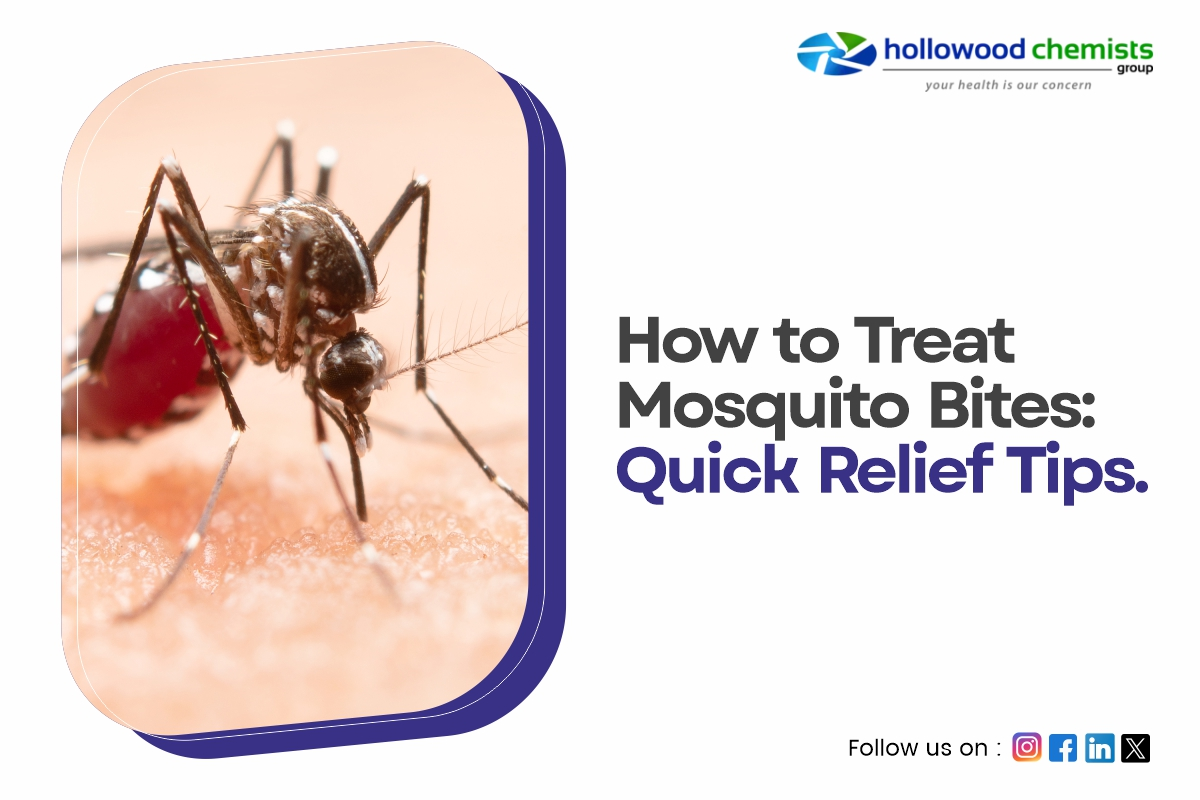
How to Treat Mosquito Bites: Quick Relief Tips.

How to Treat Mosquito Bites: Quick Relief Tips and Remedies

How to Treat Mosquito Bites: Quick Relief Tips and Remedies

Mosquito bites are a common nuisance during the warmer months and while travelling abroad. Most bites are harmless and settle within a few days, but the itching, redness and swelling can be uncomfortable. In some cases, mosquito bites can become infected or trigger an allergic reaction, requiring medical advice.

At Hollowood Chemists, our pharmacists provide expert advice on insect bite treatment  through our Pharmacy First service, recommend suitable over-the-counter medicines, and offer travel health services to help you prevent mosquito bites before your next holiday.

What Causes Mosquito Bites?

Mosquitoes bites by piercing the skin with their mouthparts to feed on blood. During this process, they inject saliva into the skin, which triggers your immune system. This reaction causes the familiar symptoms of itching, redness and swelling.

The severity of a bite varies from person to person. While some people develop only a small itchy bump, others may experience a large swollen mosquito bite, blistering or an allergic reaction.

Mosquito bites are more common during:

  • Warm summer evenings
  • Holidays in tropical or subtropical countries
  • Outdoor activities near lakes, rivers or woodland
  • Areas with standing water where mosquitoes breed

Although mosquitoes in the UK rarely spread serious diseases, bites acquired abroad may carry a higher risk of illnesses such as malaria or dengue fever. If you’re travelling overseas, seeking travel clinic mosquito advice before departure is recommended.

Can Mosquito Bites Spread Disease?

Although mosquito bites in the UK rarely transmit disease, bites acquired overseas can spread serious infections including:

  • Malaria
  • Dengue fever
  • Chikungunya
  • Zika virus
  • Yellow fever
  • Japanese encephalitis

Travellers should seek travel health advice before visiting affected countries.


Travel Vaccinations & Medicine Clinic


Common Insect Bites and Stings

Mosquitoes are just one of several insects that can bite or sting. Understanding the difference can help you choose the most appropriate treatment.

Common insect bites and stings include:

  • Mosquito bites – itchy, raised red bumps that usually appear within minutes.
  • Flea bites – small, itchy spots often found around the ankles or lower legs.
  • Midge bites – tiny, intensely itchy bites that often occur in groups.
  • Bee or wasp stings – painful stings that can cause immediate swelling and redness.

While most insect bites improve without treatment, severe swelling, signs of infection, or allergic reactions should always be assessed by a healthcare professional.


Insect Bite Treatment

Mosquito Bite Symptoms

Typical mosquito bite symptoms include:

  • Itchy mosquito bites
  • Small raised red bumps
  • Mild swelling around the bite
  • Warmth or tenderness
  • A small central puncture mark

Some people may experience:

  • A painful mosquito bite
  • Large mosquito bite swelling
  • A mosquito bite rash
  • Blistered mosquito bites
  • Multiple bites across exposed areas of skin

Children and people with sensitive skin may experience a stronger inflammatory response, resulting in more noticeable swelling.

Immediate Relief for Mosquito Bites

If you’ve recently been bitten, acting quickly can reduce itching and swelling.

Wash the Area

Clean the bite gently with soap and cool water to reduce the risk of infection and remove any irritants from the skin.

Apply a Cold Compress

An ice pack for mosquito bites can help reduce swelling, numb the area and provide fast mosquito bite itching relief.

Wrap ice in a clean cloth and apply it for around 10–15 minutes. Never place ice directly onto the skin.

Avoid Scratching

Scratching may feel satisfying temporarily but can damage the skin, increase inflammation and allow bacteria to enter, leading to a mosquito bite infection.

Keeping fingernails short and avoiding repeated scratching can significantly reduce this risk.

Read: How to Treat Mosquito Bites: Quick Relief Tips and Remedies

Mosquito Bite Treatment

Most mosquito bites improve within a few days, but treatment can make symptoms much more comfortable.

Anti-Itch Creams and Gels

An effective mosquito bite cream may help calm itching and reduce skin irritation.

Your pharmacist may recommend products such as:

  • Hydrocortisone cream (where appropriate)
  • Bite relief creams
  • Cooling gels
  • Calamine lotion for soothing irritated skin

These treatments can help relieve discomfort, particularly if the itching is interfering with sleep or daily activities.

Always follow the product instructions and speak with a pharmacist if you’re unsure which treatment is suitable.


Insect Bite Treatment


Antihistamines for Allergic Reactions

If itching is severe or multiple bites are causing discomfort, an oral antihistamine for mosquito bites may be appropriate.

A mosquito bite antihistamine works by reducing the body’s allergic response to mosquito saliva, helping relieve itching and swelling.

Antihistamines may be particularly helpful if:

  • You have several mosquito bites.
  • The swelling is more widespread.
  • Symptoms are affecting your sleep.

Your pharmacist can advise which antihistamine is suitable based on your age, medical history and any other medicines you take.

Pain Relief Medication

Although itching is the most common symptom, some people experience tenderness or pain from insect bites.

If required, simple pain relief medicines such as paracetamol or ibuprofen may help ease discomfort. These should be taken according to the patient information leaflet and may not be suitable for everyone.

Swollen Mosquito Bite Treatment

A swollen mosquito bite is usually caused by your body’s immune response rather than an infection.

To reduce swelling:

  • Apply a cold compress.
  • Keep the affected area elevated where possible.
  • Use an appropriate antihistamine if recommended by your pharmacist.
  • Apply an anti-inflammatory cream if suitable.

Swelling often improves within a few days without further treatment.

However, if swelling continues to worsen, spreads significantly or is accompanied by fever or increasing pain, seek medical advice promptly.

Read: Itchy, Swollen or Infected? Best Treatment Options for Insect Bites

Infected Mosquito Bite Treatment

Although uncommon, scratching can allow bacteria to enter the skin and cause a secondary bacterial infection.

Possible signs of a mosquito bite infection include:

  • Increasing redness around the bite
  • Swelling that continues to worsen
  • Warm or hot skin
  • Pus or fluid leaking from the bite
  • Increasing pain
  • Fever or feeling generally unwell

An infected mosquito bite treatment may require assessment by a pharmacist, GP or NHS service. In some cases, prescription antibiotics may be necessary.

At Hollowood Chemists, our pharmacists can assess minor skin conditions, advise whether pharmacy treatment is appropriate and recommend when further medical assessment is needed.


Insect Bite Treatment


Pharmacy Treatment for Mosquito Bites

Many people search for a mosquito bite pharmacy treatment because pharmacists are often the quickest healthcare professionals to access for minor conditions.

Visiting a pharmacy for mosquito bites allows you to receive personalised advice without waiting for a GP appointment.

At Hollowood Chemists, our experienced pharmacy team can help you choose suitable treatments for:

  • Itchy mosquito bites
  • Painful or swollen bites
  • Mild allergic skin reactions
  • Bite relief creams and antihistamines
  • Advice on preventing insect bites during future travel

We also provide travel health pharmacy services, including travel vaccinations, destination-specific advice and guidance on malaria prevention tablets for eligible travellers heading to higher-risk destinations.

Mosquito Bites vs Midge Bites: How to Tell the Difference

Mosquito and midge bites can look similar, but there are a few key differences that may help you identify the cause.

Feature Mosquito Bites Midge Bites
Appearance Raised, round red bump Small red spots, often in clusters
Itching Mild to moderate Often very intense
Pain Usually painless when bitten Can feel sharp or irritating
Common Location Exposed skin such as arms, legs and face Ankles, legs, arms and neck
Swelling Mild to moderate, sometimes larger in sensitive individuals Usually smaller but may become inflamed after scratching

Both mosquito and midge bites usually settle within a few days. However, persistent swelling, worsening redness or signs of infection should be assessed by a healthcare professional.

Read: Emergency Treatments for Insect Bites

How to Prevent Mosquito Bites

Prevention is often the most effective way to avoid discomfort, particularly when travelling abroad or spending time outdoors during warmer weather.

Use an Effective Insect Repellent

Choose the best mosquito repellent product containing DEET 50% or another recommended active ingredient. Apply it according to the manufacturer’s instructions, especially during the evening when mosquitoes are most active.

Wear Protective Clothing

If you’re spending time outdoors:

  • Wear long sleeves and full-length trousers.
  • Choose light-coloured clothing where practical.
  • Cover exposed skin, particularly around dawn and dusk.

Reduce Exposure

Mosquitoes are attracted to standing water, so avoid spending long periods near ponds, marshes or other areas where they breed whenever possible.

Protect Your Accommodation

When travelling:

  • Keep windows closed where possible.
  • Use mosquito screens or nets.
  • Sleep under a treated mosquito net if recommended for your destination.

These simple steps can significantly reduce your risk of insect bites on holiday.

When to Visit a Pharmacist or GP

Most mosquito bites can be managed at home, but some situations require professional advice. Visit Hollowood Chemists nearest branch today or explore our online services to learn how our pharmacy first service can help you manage insect bites and other minor ailments. Our pharmacists are always available to provide expert care tailored to your needs.

Visit a pharmacist if:

  • The itching is severe or affecting your sleep.
  • You need advice on a suitable mosquito bite cream or oral antihistamines.
  • The bite remains swollen after several days.
  • You’re unsure whether your symptoms are normal.
  • You would like advice on insect bite treatment or preventing future bites.


Hollowood Chemists


Contact your GP or seek urgent medical advice if:

  • The bite appears infected with increasing redness, warmth or pus.
  • You develop a fever or feel generally unwell.
  • Swelling continues to worsen or spread significantly.
  • You experience symptoms of a severe allergic reaction, such as difficulty breathing, swelling of the face or throat, or dizziness. Call 999 immediately if these symptoms occur.
  • You become unwell after returning from a country where mosquito-borne illnesses such as malaria are present.

Early assessment can help prevent complications and ensure appropriate treatment if required.

Final Thoughts

Mosquito bites are usually mild, but prompt treatment can help relieve itching, reduce swelling and lower the risk of infection. Knowing how to care for a bite, and when to seek professional advice, can make recovery quicker and more comfortable.

If you’re looking for trusted mosquito bite treatment in the UK, advice on insect bite treatment, or guidance before travelling abroad, Hollowood Chemists is here to help. Our experienced pharmacists can recommend suitable over-the-counter treatments, provide personalised travel health advice and support you with travel vaccinations, malaria prevention tablets, and practical mosquito bite prevention tips for your destination.

Whether you need help managing a bite at home or preparing for your next trip, visit your nearest Hollowood Chemists pharmacy for expert, friendly advice.

Frequently Asked Questions

  • How do you treat mosquito bites?

Most mosquito bites improve within a few days. Washing the area, applying a cold compress and using an anti-itch cream or antihistamine can help relieve itching and swelling. Avoid scratching, as this increases the risk of infection.

  • Why Do Mosquito Bites Itch?

Mosquito Saliva -> Histamine release -> itch

  • How Long Do Mosquito Bites Last?

  • itch 1–3 days
  • swelling 3–7 days
  • larger local reactions up to 10 days
  • What helps mosquito bites stop itching?

A cold compress, calamine lotion, hydrocortisone cream (where appropriate) and oral antihistamines may help reduce itching. Your pharmacist can recommend the most suitable treatment based on your symptoms.

  • What is the fastest way to treat a mosquito bite?

Applying a cold compress soon after the bite is one of the quickest ways to reduce swelling and discomfort. Using an appropriate bite relief cream or antihistamine may also provide faster symptom relief.

  • Can antihistamines help mosquito bites?

Yes. Oral antihistamines may help reduce itching and swelling caused by your body’s allergic response to mosquito saliva. They can be particularly useful if you have multiple bites or more significant swelling.

  • Why Do Some People Get Bitten More Than Others?

    • body heat
    • carbon dioxide
    • pregnancy
    • alcohol
    • genetics
    • blood group (evidence mixed)
    • darker clothing`
Medical Disclaimer

This article is intended for educational purposes only and does not replace personalised medical advice. Always speak to a qualified healthcare professional before starting or changing any weight-loss treatment.

References

    1. NHS – Insect Bites and Stings
    2. NHS – Allergic Reactions (Anaphylaxis)
    3. TravelHealthPro (UK)
    4. UK Health Security Agency (UKHSA) – Travel Health Advice
    5. NICE Clinical Knowledge Summary – Insect Bites and Stings
Strep Throat vs Sore Throat: How to Tell the Difference?

Strep Throat vs Sore Throat: How to Tell the Difference

Strep Throat vs Sore Throat: How to Tell the Difference

A sore throat is one of the most common reasons people seek advice from a pharmacist or GP, particularly during the colder months. While most sore throats are caused by viral infections and improve on their own, some are due to a Group A Streptococcus (GAS) bacterial infection, commonly known as strep throat.

Knowing the difference between sore throat and strep throat can help you understand when self-care is appropriate and when you may need further assessment or treatment.

At Hollowood Chemists, our experienced pharmacists provide sore throat assessments through the NHS Pharmacy First service (where eligible), helping you access timely advice and appropriate treatment without always needing a GP appointment.

Eligible adults and children aged five years and over can access an NHS Pharmacy First consultation for acute sore throat. The pharmacist will assess symptoms, check for red flags and use the relevant NHS clinical pathway to decide whether self-care, treatment or onward referral is appropriate.

What Is a Sore Throat?

A sore throat refers to pain, irritation or discomfort in the throat, particularly when swallowing. It is usually a symptom rather than a disease itself and is often linked to a viral upper respiratory infection, such as the common cold or flu.

However, a sore throat can also be caused by:

  • Viral infections
  • Bacterial infections
  • Tonsillitis
  • Allergies, including hay fever allergy sore throat
  • Dry air or dry throat
  • Smoking or air pollution
  • Acid reflux

Most sore throats improve within 5 to 7 days without antibiotics.

Common sore throat symptoms include:

  • Pain when swallowing
  • An itchy throat
  • Red throat
  • Mild fever
  • Hoarse voice
  • Dry throat
  • Swollen glands in the neck


Book a Consultation


What Is Strep Throat?

Strep throat is a bacterial throat infection caused by Group A Streptococcus (GAS) bacteria. Unlike most sore throats, strep throat may require assessment and, in some cases, antibiotic treatment to reduce symptoms and prevent complications.

Strep throat is more common in children, but adults can get strep throat too.

Typical strep throat symptoms include:

  • Sudden severe sore throat
  • Fever
  • Pain when swallowing
  • Swollen tonsils
  • White patches on the tonsils
  • Swollen lymph nodes in the neck
  • Headache
  • Feeling generally unwell

People with strep throat usually do not have a cough, which can help distinguish it from many viral infections.

Strep Throat vs Sore Throat: What’s the Difference?

Although the symptoms can overlap, there are some important differences.

Feature Viral Sore Throat Strep Throat
Cause Viral infection Group A Streptococcus (bacterial infection)
Onset Gradual Sudden
Fever Mild or absent Often high
Cough Common Usually absent
Runny nose Common Rare
White patches on tonsils Occasionally Common
Swollen neck glands Sometimes Common
Antibiotics Not beneficial May be recommended after clinical assessment
Typical duration 5–7 days Around 3–7 days with appropriate treatment

While these signs can provide useful clues, it’s not always possible to diagnose strep throat based on symptoms alone.

How Can You Tell If You Have Strep Throat?

Although only a healthcare professional can make a clinical assessment, the following signs may suggest strep throat:

  • Severe throat pain that develops quickly
  • Fever above 38°C
  • Pain when swallowing
  • White spots or white patches on the tonsils
  • Swollen lymph nodes in the neck
  • Red throat without a cough
  • Feeling generally unwell

These are often referred to as the signs of strep throat, but similar symptoms can also occur with tonsillitis or other throat infections.

If you’re experiencing these symptoms, your pharmacist or GP can assess whether further treatment is needed.


Sore Throat Treatment


Viral vs Bacterial Sore Throat

Understanding whether your sore throat is viral or bacterial is important because treatment differs.

Let’s break it down simply:

Viral Sore Throat

Most sore throats are viral and part of a broader illness, like:

  • The common cold
  • Influenza
  • COVID-19
  • Respiratory syncytial virus (RSV)

Symptoms often include:

  • Runny or blocked nose
  • Cough
  • Low-grade fever
  • Fatigue
  • Watery eyes

Viral sore throats typically resolve on their own within a few days to a week. Antibiotics won’t help, but rest, fluids, and symptom relief can.

Bacterial Sore Throat

A bacterial infection, like Group A Streptococcus, can cause a more severe sore throat. It may need antibiotic treatment to prevent complications.

Signs it might be bacterial include:

  • Sudden onset of sore throat
  • Fever above 38°C
  • Pain when swallowing
  • Swollen tonsils with white patches
  • No cough or cold symptoms
  • Swollen neck glands

A healthcare professional may consider whether antibiotics are appropriate after assessing your symptoms.

Using antibiotics only when necessary helps reduce antibiotic resistance, which is an important part of responsible healthcare in the UK.

Read: Viral vs. Bacterial: What’s the Difference?

How Pharmacists Assess a Sore Throat

Many people are surprised to learn that a pharmacist can assess many sore throat symptoms without the need for a GP appointment.

Under the NHS Pharmacy First service (where eligible), pharmacists use recognised clinical assessment tools to help determine whether symptoms are more likely to be viral or bacterial.

Two commonly used tools include:

FeverPAIN Score

The FeverPAIN score considers:

  • Fever in the previous 24 hours
  • Pus on the tonsils
  • Rapid onset of symptoms (within three days of onset)
  • Severely inflamed tonsils
  • No cough or cold symptoms

A higher score may indicate a greater likelihood of a bacterial infection.

Centor Score

Another recognised assessment tool is the Centor score, which looks at:

  • Fever
  • Tonsillar swelling or white patches
  • Tender swollen lymph nodes
  • Absence of a cough

These scoring systems help pharmacists decide whether self-care is appropriate or whether further medical assessment or antibiotics should be considered.

At Hollowood Chemists, our pharmacists can assess your symptoms, provide expert advice and, where appropriate under Pharmacy First, supply treatment or refer you to another healthcare professional if needed.

Can Pharmacy First Help with a Sore Throat?

For many people, the answer is yes.

The NHS Pharmacy First service allows eligible patients with uncomplicated sore throats to receive advice and, where clinically appropriate, treatment directly from a participating pharmacy without first seeing a GP.

The team at Hollowood Chemists can help assess your symptoms and recommend the most appropriate next steps based on current NHS guidance.

Strep Throat Treatment

The right strep throat treatment depends on whether your sore throat is caused by a bacterial or viral infection. Because strep throat is caused by Group A Streptococcus (GAS) bacteria, some people may benefit from antibiotics following a clinical assessment.

However, antibiotics are not needed for most sore throats, as the majority are caused by viruses. Taking antibiotics when they are not needed is unlikely to improve recovery and contributes to antimicrobial resistance

Antibiotics provide only limited symptom benefit for many people with acute sore throat, so the decision depends on symptom severity, clinical score, risk factors and the likelihood of complications.

If your pharmacist or GP suspects a bacterial infection, they will assess your symptoms before deciding whether antibiotics are appropriate.

Sore Throat Treatment: What Helps?

Whether your sore throat is viral or bacterial, there are several ways to relieve symptoms while your body recovers.

Home Remedies

Simple self-care measures can often provide effective relief for a sore throat.

These include:

  • Drinking plenty of fluids to stay hydrated.
  • Gargling with warm salt water (not suitable for young children).
  • Resting to help your immune system recover.
  • Avoiding smoking and smoky environments.
  • Using a humidifier if dry indoor air is making your throat feel worse.

Pharmacy Treatments

Your pharmacist can recommend a range of sore throat medicines to help manage symptoms.

Depending on your needs, these may include:

  • Sore throat lozenges to soothe irritation.
  • Medicated or soothing throat lozenges.
  • Throat sprays for temporary pain relief.
  • Paracetamol for pain or fever.
  • Ibuprofen (if suitable) to reduce pain and inflammation.
  • Warm drinks, cool drinks or soft drinks based on individual preference

If your sore throat is linked to allergies, appropriate antihistamines may also help with an itchy throat or hay fever allergy sore throat.

At Hollowood Chemists, our pharmacists can recommend suitable over-the-counter treatments based on your symptoms and medical history.


Book a video consultation


Home Remedies vs Pharmacy Treatment vs Antibiotics

Treatment Best For When It’s Recommended
Rest and fluids Mild viral sore throat First-line self-care
Warm salt water gargles Throat discomfort Temporary symptom relief
Lozenges and throat sprays Pain and irritation Mild to moderate symptoms
Paracetamol or ibuprofen Pain and fever Short-term symptom relief (if appropriate)
Antibiotics Confirmed or strongly suspected bacterial infection Only after clinical assessment

Remember: Antibiotics should only be used when recommended by a healthcare professional.

How Long Does Strep Throat Last?

Although recovery varies, the table below provides a general guide.

Condition Typical Recovery Time
Viral sore throat 5–7 days
Strep throat (with appropriate treatment) Around 3–7 days
Severe throat infection May take longer depending on the cause

If your symptoms are getting worse rather than better, or they persist beyond a week, seek advice from a pharmacist or GP.

Is Strep Throat Contagious?

Yes. Strep throat is contagious and spreads through respiratory droplets when an infected person coughs, sneezes or shares eating utensils.

To reduce the risk of spreading infection:

  • Wash your hands regularly.
  • Cover your mouth and nose when coughing or sneezing.
  • Avoid sharing drinks, cutlery or towels.
  • Stay at home if you have a fever and feel unwell.

Practising good hygiene helps protect your family, colleagues and the wider community.

Seek medical advice if a sore throat is accompanied by a fine, rough ‘sandpaper-like’ rash, flushed cheeks or a red, swollen tongue, as these may suggest scarlet fever.

When Should You Visit a Pharmacist or GP?

Most sore throats improve without complications, but some symptoms require professional assessment.

Visit a pharmacist if you have:

  • A sore throat lasting more than a few days.
  • Pain when swallowing.
  • Swollen tonsils.
  • White patches on your throat.
  • Mild fever.
  • Questions about sore throat medicine or pain relief for sore throat.

The pharmacy team at Hollowood Chemists can advise on appropriate treatment.


Book Consultation and Treatment Service


Contact your GP or seek urgent medical advice if:

  • Stridor or noisy breathing
  • Drooling or inability to swallow saliva
  • Severe difficulty swallowing fluids
  • Muffled or “hot potato” voice
  • Marked one-sided throat swelling
  • Difficulty opening the mouth
  • Neck swelling or stiffness
  • Severe dehydration
  • Significant breathing difficulty
  • Rapid deterioration
  • Immunosuppression or serious underlying illness
  • A non-blanching rash or features of sepsis

Final Thoughts

Although strep throat and a sore throat can feel similar, understanding the difference is important to ensure you receive the right care. Most sore throats are caused by viral infections and improve with self-care, while bacterial infections such as strep throat may require further assessment and, in some cases, antibiotics.

If you’re experiencing a persistent or severe sore throat, the team at Hollowood Chemists is here to help. Our pharmacists provide expert advice on sore throat symptoms, recommend appropriate treatments and offer NHS Pharmacy First consultations for eligible patients. Whether you need reassurance, symptom relief or guidance on the next steps, we’re committed to helping you access the right care quickly and conveniently.

Frequently Asked Questxions

Q.1 Can a pharmacist diagnose strep throat?

A pharmacist can clinically assess an acute sore throat using the NHS Pharmacy First pathway and tools such as FeverPAIN. These tools estimate the likelihood of a streptococcal infection but do not confirm the cause with certainty.

Q.2 Does strep throat go away on its own?

Many sore throats, including some caused by streptococcal bacteria, improve without antibiotics. However, antibiotics may be appropriate for some patients based on clinical assessment, symptom severity and risk of complications.

Q.3 Can I get antibiotics from a pharmacy?

Eligible patients may receive an antibiotic through NHS Pharmacy First when the pharmacist’s assessment shows that the relevant clinical and PGD criteria are met. Antibiotics are not supplied automatically for every sore throat.

Q.4 What is the difference between a sore throat and strep throat?

A sore throat is a symptom that can have many causes, most commonly viral infections. Strep throat is a specific bacterial infection caused by Group A Streptococcus and may require antibiotics after a clinical assessment.

Q.5 Is strep throat contagious?

Yes. Strep throat spreads through close contact with respiratory droplets from an infected person. Good hand hygiene and avoiding close contact while unwell can help reduce transmission.

Q.6 Does strep throat go away on its own?

Some cases improve naturally, but because strep throat is a bacterial infection, certain people may benefit from antibiotics. A healthcare professional can advise on the most appropriate treatment.


Medical Disclaimer

This article is intended for educational purposes only and does not replace personalised medical advice. Always speak to a qualified healthcare professional before starting or changing any weight-loss treatment.

References

      1. NHS – Sore Throat
        https://www.nhs.uk/conditions/sore-throat/
      2. NHS – Antibiotics
        https://www.nhs.uk/conditions/antibiotics/
      3. NICE Clinical Knowledge Summary – Sore Throat (Acute)
        https://cks.nice.org.uk/topics/sore-throat-acute/
      4. NICE – FeverPAIN Clinical Score
        https://cks.nice.org.uk/topics/sore-throat-acute/
      5. UK Health Security Agency (UKHSA)
        https://www.gov.uk/government/organisations/uk-health-security-agency


Treat 10 Conditions at Your Local Pharmacy – Hollowood Chemist

Pharmacy First: Treat 10 Conditions at Your Local Pharmacy – Hollowood Chemists

Pharmacy First: Treat 10 Conditions at Your Local Pharmacy – Hollowood Chemists

If you live in or around St Helens, Wigan, Bolton, Trafford, Northwich, Crewe and Staffordshire, there’s good news: you don’t always need to book a GP appointment for many common health conditions. Through the NHS Pharmacy First service, your local community pharmacy hollowood chemists can now assess, treat and supply medication for certain conditions, often faster than a GP.

Below is a detailed breakdown of 10 conditions (7 official Pharmacy First conditions plus 3 additional common ones) your local pharmacist can help with – and how this benefits people across the North West.

1. Hollowood Chemists for Sore Throat Treatment (Ages 5+)

Pharmacists can now assess and treat people aged 5 years and above for sore throat treatment under Pharmacy First. If you’re in the St Helens, Wigan, Bolton, Trafford, Northwich, Crewe and Staffordshire area and experiencing a sore, painful, or swollen throat, visiting your nearest local Hollowood Chemists branch may be quicker than waiting for a GP appointment.

Your pharmacist can advise on:

  • Self-care options
  • Over-the-counter remedies
  • Whether a prescription-only medicine is required


Book a Sore Throat consultation


2. Hollowood Chemists for Earache Relief and Treatment (Ages 1–17)

Pharmacy First allows pharmacists to assess earache in children and teenagers aged 1 to 17. Hollowood Chemists pharmacists will examine symptoms, recommend the correct Earache treatment, and quickly identify if escalation is needed – all without a GP visit.


Book a Earache Relief consultation


3. Hollowood Chemists for Sinus Relief and Treatment – Sinusitis (Ages 12+)

Blocked sinuses, facial pressure and headaches can disrupt work, school, sleep or daily life. If you’re aged 12 or over, our Hollowood Chemists pharmacists can treat sinusitis under Pharmacy First.

Common sinusitis symptoms include:

  • Facial pressure
  • Headache
  • Blocked nose
  • Bad breath
  • Toothache

Residents in St Helens, Wigan, Bolton, Trafford, Northwich, Crewe, Staffordshire and surrounding towns can get fast sinusitis treatment at their local Hollowood pharmacy without needing a GP appointment.


Book a Sinusitis Treatment consultation


4. Hollowood Chemists for Insect Bite Treatment (Ages 1+)

If a bite turns red, warm, swollen, painful, or begins oozing, our pharmacists can help assess and treat infected insect bites for anyone aged 1 year and over.

Your Hollowood Chemists pharmacy can provide immediate treatment, preventing the infection from getting worse.


Book a Insect Bite Treatment


5. Hollowood Chemists for Impetigo Treatment (Ages 1+)

Impetigo is a contagious bacterial skin infection affecting children and adults. Impetigo symptoms include small blisters, yellow-crusted patches, and sores around the nose and mouth. Hollowood Chemists is your trusted destination for expert consultation and treatment of Impetigo and related symptoms aged 1 and above.

Parents in St Helens, Wigan, Bolton, Trafford, Northwich, Crewe, Staffordshire  and surrounding can access quick impetigo treatment without needing a GP appointment.


Impetigo Treatment consultation


6. Hollowood Chemists for Shingles Treatment (Ages 18+)

Adults aged 18 and over showing signs of shingles- such as tingling, pain and a blistering rash on one side of the body or face – can seek assessment and treatment at their local pharmacy.

If you suspect shingles, your nearest local Hollowood Chemists in St Helens, Wigan, Bolton, Trafford, Northwich, Crewe, Staffordshire can help initiate treatment without a GP appointment.


Shingles Treatment consultation


7. Uncomplicated Urinary Tract Infections (UTIs) – Women Aged 16–64

The term “uncomplicated UTI” refers to an infection of the lower urinary tract (bladder/urethra) in an otherwise healthy individual with a normal urinary tract, who is not-pregnant and without significant comorbidities or anatomical abnormalities.

Women aged 16–64 with uncomplicated UTI symptoms can now use Pharmacy First.
Common symptoms:

  • Burning when urinating
  • Needing to pee more often
  • Cloudy or strong-smelling urine

If you live in the St Helens, Wigan, Bolton, Trafford, Northwich, Crewe, Staffordshire area and have typical UTI symptoms (without fever or severe back pain), your pharmacist may be able to treat you immediately.


Book a UTI Treatment consultation


Recommended Reading
: Complicated and Uncomplicated UTI comprehensive guide

8. Minor Skin, Wound & Ailment Support

As an NHS-backed pharmacy, Hollowood Chemists offers a wide range of NHS, pharmacy first services and private healthcare services tailored to meet your everyday health needs.

Your local chemist remains the best first point of contact for:

  • Mild eczema flare-ups
  • Small cuts and wounds
  • General skin irritation

People in St Helens, Wigan, Bolton, Trafford, Northwich, Crewe, Staffordshire can save time by using their local Hollowood branch for quick advice.

9. Winter Cough, Cold & Chestiness Advice

Again, while serious respiratory infections still need a GP/hospital, your local chemist is a reliable first contact for coughs, colds or chestiness that is not severe. They can advise, monitor and refer if symptoms worsen. Using local chemist resources helps free up GP slots for more complex cases.

For non-serious coughs, colds, and general winter illnesses, your pharmacy can offer:

  • Symptom checks
  • Over-the-counter treatment
  • Monitoring
  • Referral if symptoms worsen

This keeps GP appointments available for more complex issues.

10. Allergy & Hay Fever Help

Allergy and hay fever symptoms can be uncomfortable and disruptive, but your local pharmacy is here to help. Whether your allergies are triggered by pollen, dust, mould, or seasonal changes, you can access expert advice, effective treatments, and personalised support to help you manage symptoms and feel better every day. Your nearest hollowood chemists  pharmacy can support you with:

  • Antihistamines
  • Nasal sprays
  • Eye drops
  • Lifestyle advice
  • Referral if symptoms persist

Residents across the North West can benefit from pharmacists who understand local pollen conditions and seasonal trends.

Why This Matters Locally

  • With many GP surgeries stretched, using your local pharmacy (St Helens, Wigan, Bolton, Trafford, Northwich, Crewe, Staffordshire) means faster access to care.
  • Pharmacies in North West England are within walking distance for many people, offering more convenience.
  • By treating these common conditions at pharmacies, GP appointments are freed up for more serious issues.
  • Always check with your local Hollowood Chemists branch that they provide the Pharmacy First service (most do, but availability may vary) in your area (St Helens, Wigan, Bolton, Trafford, Northwich, Crewe, Staffordshire).

When Should You Still See a GP or A&E?

You should see a GP or go to A&E if you have a high fever, severe pain, spreading swelling, signs of a serious infection, or blood in your urine with back pain. Pregnant or immunocompromised patients should always seek medical advice promptly.

  • High fever
  • Severe pain
  • Spreading swelling
  • Blood in urine and severe back pain
  • Severe infection signs
  • If you’re pregnant and experiencing any Pharmacy First-listed condition
  • Immunocompromised conditions

Pharmacists always assess eligibility first and will refer you appropriately.

How to Use Pharmacy First at Hollowood Chemists

  1. Visit or call your nearest Hollowood Chemists (St Helens (Garswood, Heatons, Millfields, Haydock, Bradlegh), Wigan (Moorside, Mesnes, Ince, Blackhorse (Blackrod), Bolton (Market), Trafford (Sale, Village), Northwich (Barnton), Crewe, and Clayton in Staffordshire).
  2. Tell the pharmacist you think you have a Pharmacy First-eligible condition.
  3. You’ll be seen in a private consultation room.
  4. The pharmacist will assess your symptoms and medical history.
  5. If eligible, you may receive self-care advice, OTC (over-the-counter) treatment, or NHS-supplied prescription-only medicine.
  6. If you don’t meet eligibility criteria, you will be referred to the GP or appropriate service.

Final Takeaway

If you live in North West, England – including St Helens, Wigan, Bolton, Trafford, Northwich, Crewe, Staffordshire your local Hollowood Chemists should be your first point of care for:

  • Sore throat
  • Earache
  • Sinusitis
  • Infected insect bites
  • Impetigo
  • Shingles
  • UTIs (eligible women)
  • Minor skin issues
  • Coughs & colds
  • Allergies

It’s faster, more convenient, NHS-backed, and GP-approved.

Pharmacy First doesn’t replace GPs for serious conditions, but it is a smart local-first option for everyday health issues.


FAQs

1. Why should local residents choose Hollowood Chemists first?

Because Hollowood branches in St Helens, Wigan, Bolton, and Merseyside offer:

  • Fast walk-in access
  • Clinically trained Pharmacy First pharmacists
  • Local community understanding
  • Private consultation rooms
  • Extended opening hours

2. Do I need an appointment for Pharmacy First?

No. Most patients can walk in. Some branches also accept phone bookings.

3. Can a pharmacist give antibiotics?

Yes – but only when clinically appropriate under NHS Pharmacy First rules (e.g., impetigo, UTIs, infected bites, shingles).

4. What should I bring for a consultation?

Bring:

  • NHS number (if known)
  • Current medication list
  • Any allergy information
  • Photos of rashes/skin changes (if relevant)

5. Are pharmacists trained to diagnose these conditions?

Yes. Pharmacists receive additional clinical training and use NHS-approved protocols to assess, treat and refer safely.

Disclaimer: This content is provided for informational and educational purposes only and is not intended to replace professional medical advice, diagnosis, or treatment. Always seek advice from a qualified healthcare professional, pharmacist, or GP if you have any questions or concerns about a medical condition or medication. Never disregard professional medical advice or delay seeking medical care because of information provided here.

Authority Referance:

  1. NHS
  2. England.nhs.uk
pharmacy-first-flu-antivirals-without-gp

How Pharmacy First works for flu: get antivirals without the GP wait

Category: Pharmacy First Services

What is Pharmacy First? 

The NHS Pharmacy First scheme for flu allows patients in England to get flu treatment directly from a community pharmacy – without waiting for a GP appointment. This initiative helps people access antivirals and care faster, while easing the burden on GP surgeries during the busy winter season.

How Pharmacy First Works at Hollowood Chemists

The Process Explained

How pharmacy first works for flu at Hollowood Chemists is straightforward. Visit us and speak with our qualified pharmacist. They’ll assess your symptoms and review your medical history. If eligible, we’ll prescribe and dispense medication immediately – no GP referral needed.

Step-by-Step: How to Get Flu Medication Fast

Step 1: Visit Hollowood Chemists with flu symptoms.  Step 2: Speak with our pharmacy team about pharmacy first flu services. Step 3: Consult privately with our pharmacist (private consultation room available). Step 4: Receive assessment and eligibility confirmation. Step 5: Collect your flu antivirals prescription immediately. Step 6: Begin treatment within the critical 48-hour window.

Who Can Access It?

Get antivirals without a GP through Pharmacy First at  Hollowood Chemists if you meet eligibility criteria. This includes adults and children with flu symptoms within 48 hours of onset. Particularly, those at higher risk from complications – pregnant women, over-65s, and people with chronic conditions – benefit most from rapid access to quick flu treatment pharmacy services like ours.

Benefits of Pharmacy First

Quick Flu Treatment Without GP Wait

You can get flu medication the same day – no waiting for GP calls or appointments. This is especially useful for parents, working adults, and older people during flu outbreaks.

Reducing Pressure on the NHS

By accessing community pharmacy flu treatment, patients help reduce GP workloads and free up appointments for more serious conditions.

Why Choose Hollowood Chemists for Pharmacy First?

Use Incontent Img.

Local Expertise

Hollowood Chemists is deeply rooted in our community. We understand local health needs and provide personalised care.

Experienced Pharmacists

Our team has extensive knowledge of flu treatment pharmacy services and antiviral medications. We provide professional, compassionate care.

Extended Hours

We offer flexible opening hours including evenings and weekends, making quick flu treatment pharmacy access convenient for busy families.

No GP Appointment Needed

At  Hollowood Chemists, you get antivirals without GP delays. Same-day treatment access is our standard.

Conclusion 

Scheme ensures eligible patients start flu antivirals within the critical 48-hour window when treatment is most effective. Don’t wait in GP queues or delay treatment. Visit Hollowood Chemists today to access our pharmacy’s first scheme for flu. Our experienced pharmacists are ready to assess your symptoms, confirm eligibility, and provide the quick flu treatment.

Frequently Asked Questions

How does Pharmacy First work for the flu? Visit  Hollowood Chemists, speak with our pharmacist, receive assessment, and collect prescription antivirals-all within hours. No GP appointment necessary. Can I get flu antivirals at a pharmacy without a GP? Yes. Pharmacy first for flu at Hollowood Chemists specifically allows our pharmacists to prescribe antivirals directly without GP involvement. You simply need to meet eligibility criteria: flu symptoms within 48 hours of onset.  Pharmacy First flu scheme UK-how it works? The NHS scheme authorises community pharmacies like Hollowood Chemists  to diagnose and treat flu directly. Our pharmacists assess symptoms, confirm diagnosis, and prescribe appropriate antivirals immediately if eligible. Can I get same-day flu medication at a pharmacy? Absolutely. At Hollowood Chemists, we can dispense medication within 20-30 minutes of consultation, allowing same-day treatment access. 
Complicated and uncomplicated UTI - Comprehensive guide

Complicated and uncomplicated UTI – Comprehensive guide

Complicated and uncomplicated UTI – Comprehensive guide

Urinary tract infections (UTIs) are one of the most common bacterial infections, particularly among women. However, not all UTIs are the same. Healthcare professionals often divide them into uncomplicated and complicated UTIs. Knowing the difference helps determine how serious the infection is and what kind of treatment you may need.

Let’s break down complicated vs uncomplicated UTI, how each is treated in the UK, and when to see your pharmacist or GP.

What is an Uncomplicated UTI?

The term uncomplicated UTI refers to an infection of the lower urinary tract (bladder/urethra) in an otherwise healthy individual with a normal urinary tract, who is non-pregnant and without significant comorbidities or anatomical abnormalities.

Key points

  • It is typically a plain bladder infection (cystitis) in a healthy woman.
  • The primary symptoms include burning on urination, frequency, urgency, lower tummy discomfort or suprapubic pain.
  • Because it is “uncomplicated”, the prognosis is typically good and the management simpler.
  • In the UK, this is commonly managed in primary care and through “pharmacy-first” pathways for eligible patients. The NHS notes that women aged 16–64 who are not pregnant may see a pharmacist for an uncomplicated UTI. 

What is a Complicated UTI?

A complicated UTI refers to a urinary tract infection in a person with one or more risk factors that make it more likely to fail treatment, recur or spread to the upper urinary tract (e.g., kidneys).

Key points

Risk factors and contexts that make a UTI ‘complicated’ include:

  • Structural or functional abnormality of the urinary tract (stones, obstruction, neurogenic bladder)
  • Presence of urinary catheter, recent urinary tract instrumentation or surgery.
  • Pregnancy (although guidelines may treat this separately) or immunosuppression.
  • Male sex, older age (especially over 65 years), renal impairment, diabetes or other comorbidities.
  • Suspected upper tract involvement (pyelonephritis), or systemic signs (fever, chills, flank pain). 

Treatment of Uncomplicated UTI in the UK

Pharmacists and GPs follow NICE guidelines for lower UTI management:

  • Antibiotics: Nitrofurantoin (100 mg twice daily for 5 days) or Trimethoprim (200 mg twice daily for 3 days), if appropriate 
  • Self-care: Stay hydrated, rest, avoid caffeine, and use paracetamol or ibuprofen for pain.
  • Follow up: If symptoms worsen or don’t improve within 48 hours, see your GP.

At  Hollowoodchemist.com, pharmacists can guide you through pharmacy first uncomplicated UTI services and offer personalised advice.


Treatment of Complicated UTI

The treatment of complicated UTI depends on the cause and severity. Typically:

  • Urine culture and sensitivity tests identify the bacteria and help choose the right antibiotic.
  • Broad-spectrum antibiotics (such as co-amoxiclav, ciprofloxacin or piperacillin-tazobactam) are used for 7–14 days or more, sometimes intravenously in hospital.
  • Addressing underlying factors (e.g., removing a catheter or treating stones) is essential to prevent recurrence.

Patients should be monitored closely for improvement and signs of complications.


Complications from UTI in Elderly People

Older adults are especially vulnerable to complications from UTI in elderly patients, such as:

  • Kidney infection (pyelonephritis)
  • Sepsis (bloodstream infection)
  • Delirium or sudden confusion
  • Worsening of underlying health conditions

Because symptoms may be vague (confusion or fatigue instead of pain), early testing and treatment are crucial. NHS guidance recommends urgent medical attention for elderly patients with sudden behaviour changes or fever.

Also Read:  UTI Treatment Pharmacy: Symptoms, Treatment, and Eligibility 

Complications of UTI in Pregnancy

Any UTI during pregnancy is automatically considered complicated due to risks of kidney infection, preterm labour, and low birth weight.
Pregnant women are treated with pregnancy-safe antibiotics and closely monitored by their GP or midwife.


Preventing Future UTIs

Whether you’ve had a complicated or uncomplicated infection, these steps can help:

  • Stay hydrated and urinate regularly.
  • Wipe front to back and avoid harsh soaps or douching.
  • Urinate soon after intercourse.
  • Wear loose, cotton underwear.
  • Avoid holding in urine for long periods.

For recurrent infections, speak to your pharmacist or GP for a prevention plan.

Conclusion

Understanding the difference between complicated and uncomplicated UTIs is essential for getting the right care. Most uncomplicated UTIs are easily managed through pharmacy first schemes, but complicated UTIs require closer medical supervision to avoid serious complications.

If you suspect a UTI, contact your local Hollowood Chemist or visit for guidance on the best next steps.

1 2 3 … 6