
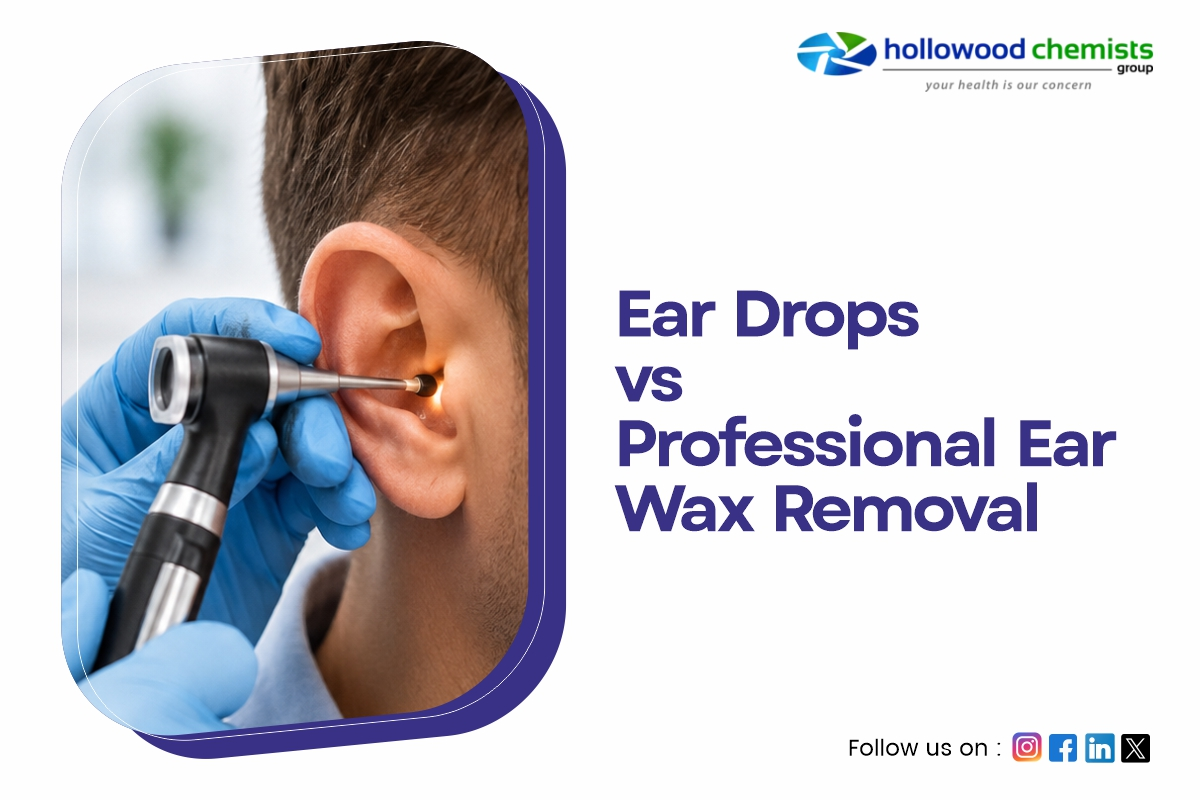
Ear Drops vs Professional Ear Wax Removal: Which Works Best?
Ear wax plays an important role in protecting your ears, but when too much builds up, it can cause discomfort, temporary hearing loss and blocked ears. Many people first try ear drops for ear wax, while others choose professional ear wax removal for quicker relief.
In this guide, we’ll compare the most common ear wax removal methods, explain when ear wax removal drops may help, and discuss when it’s time to consider professional treatment.
At Hollowood Chemists, we offer expert advice on ear care and provide a professional ear wax removal service using safe and effective microsuction technology at selected branches.
Why Does Ear Wax Build Up?
Several factors can increase the likelihood of ear wax build-up, including:
- Naturally narrow ear canals.
- Wearing hearing aids or earplugs.
- Regular use of earbuds or headphones.
- Age-related changes that make ear wax drier.
- Producing more ear wax than average.
- Using cotton buds, which can push wax deeper into the ear.
Attempting to remove wax with cotton buds or other objects may make the blockage worse and increase the risk of injury.
Symptoms of Blocked Ear Wax
A build-up of ear wax doesn’t always cause symptoms, but when it does, they can affect hearing and everyday comfort.
Common symptoms include:
- Blocked ears from ear wax
- Ear feels blocked
- Temporary hearing loss due to ear wax
- Ear pressure from wax
- Ringing in the ears (tinnitus from ear wax)
- Mild dizziness or balance problems
- Ear discomfort
- Itching inside the ear
These symptoms can also be caused by other ear conditions, so it’s important to seek professional advice if symptoms persist or worsen.
Ear Drops for Ear Wax
For many people, ear wax removal drops are the first treatment they try at home.
These drops are designed to soften hardened wax so that it can move out of the ear naturally or be removed more easily during professional treatment.
Ear drops often work well for small or soft wax build-ups, but they may not completely remove impacted ear wax or long-standing blockages.
Types of Ear Wax Removal Drops
Several products are commonly recommended to soften ear wax.
These include:
-
Olive Oil Ear Drops
Olive oil helps soften ear wax and is commonly recommended before professional ear wax removal.
-
Sodium Bicarbonate Ear Drops
Sodium bicarbonate ear drops may help break down hardened wax and are often used for several days before treatment.
-
Earol® Spray
Earol spray is an olive oil-based spray designed to soften wax and make natural removal easier.
Your pharmacist can recommend the most suitable ear wax softening drops based on your symptoms and medical history.
How Long Do Ear Drops Take to Work?
Although this varies from person to person, ear drops are typically used for 3 to 5 days, or as directed by a healthcare professional.
Softening the wax before professional removal can make treatment quicker and more comfortable.
It’s important to use the drops exactly as instructed and avoid overusing them unless advised by a healthcare professional.
Also Read: What Causes Ear Wax Build-Up and When to See a Pharmacist
Can Ear Drops Remove Impacted Ear Wax?
Sometimes – but not always.
If the wax is deeply impacted or has built up over a long period, ear drops may soften the wax without removing it completely.
Many people notice that:
- Their hearing does not improve.
- The ear still feels blocked.
- Symptoms continue after several days.
In these situations, professional ear wax removal treatment is often the safest and most effective option.
Ear Drops vs Professional Ear Wax Removal
Choosing between home treatment and professional care depends on your symptoms and the severity of the blockage.
| Feature | Ear Drops | Microsuction | Ear Irrigation |
| Purpose | Softens ear wax and may support natural clearance | Physically removes wax using gentle suction and direct vision | Flushes wax out using warm water |
| Suitable for impacted wax | May soften but not fully clear | Yes, in many cases and following assessment | Maybe, depends on the individual |
| Immediate results | Usually no | Usually yes | Often yes |
| Requires appointment | No | Yes | Yes |
| Limitations | May temporarily worsen blocked sensation | Can cause discomfort, noise, dizziness, or minor ear canal bleeding | Not suitable for all patients and can cause discomfort and dizziness |
| Performed by a trained professional | No | Yes | Yes |
For many patients with significant wax build-up, microsuction ear wax removal offers quicker symptom relief because the wax is removed during the appointment rather than relying on it to clear naturally.
Should You Use Ear Drops Before Microsuction?
In many cases, yes.
Using ear wax softening drops for several days before microsuction ear wax removal can:
- Soften hard wax.
- Make removal easier.
- Reduce treatment time.
- Improve patient comfort.
However, not everyone should use ear drops. For example, they may not be suitable if you have:
- A perforated eardrum.
- Ear surgery in the past.
- An ear infection.
- Persistent ear pain or discharge.
If you’re unsure, speak with a pharmacist or ear care professional before starting treatment.
At Hollowood Chemists, our pharmacy team can advise whether ear drops are appropriate before your appointment and answer any questions about preparing for professional ear wax removal.
What Happens If Ear Drops Don’t Work?
While ear drops for ear wax are effective for many people, they don’t work in every situation.
You should consider seeking professional assessment if:
- Your ear still feels blocked after several days.
- Your hearing remains reduced.
- You develop ear pain.
- You experience dizziness.
- Symptoms continue despite using ear drops correctly.
Persistent symptoms may indicate impacted ear wax or another ear condition that requires examination.
Rather than continuing to use home remedies repeatedly, a professional assessment can identify the cause and recommend the most appropriate treatment.
Why Professional Ear Wax Removal Is Often the Better Choice
While ear wax removal drops can help soften wax, they may not always remove a blockage completely, particularly if the wax is hard, impacted or has built up over time. In these cases, professional ear wax removal is usually the safest and most effective solution.
At Hollowood Chemists, we provide a private ear wax removal service across the North West in Staffordshire, Crewe, Northwich, Sale, Bolton, Wigan and St Helens( Find Your Nearest Branch ), using microsuction, a modern technique that gently removes excess wax under direct visual guidance. Unlike traditional ear syringing, microsuction does not rely on flushing water into the ear and is widely regarded as a safe and precise method when carried out by trained professionals.
Benefits of Professional Ear Wax Removal at Hollowood Chemists
- Performed by trained healthcare professionals.
- Safe and effective microsuction ear wax removal.
- Suitable for many cases of impacted ear wax.
- No water is used during the microsuction procedure.
- Ear examination before treatment to assess the blockage.
- Advice on ongoing ear care and preventing future wax build-up.
- Convenient appointments at selected Hollowood Chemists branches.
If your ears feel persistently blocked or you’ve tried home treatments without success, professional removal can provide faster relief and help restore hearing.
Risks and limitations of microsuction
The article currently describes benefits extensively but does not give a balanced account of potential adverse effects. Add a brief paragraph:
Microsuction is generally well tolerated, but it can occasionally cause temporary discomfort, dizziness, increased tinnitus, minor bleeding or irritation of the ear canal. The procedure may need to be stopped if the wax is too hard, too close to the eardrum or cannot be removed comfortably. A clinician should explain the benefits, limitations and potential risks before treatment.
When Should You Choose Professional Ear Wax Removal?
Home treatments are suitable for mild wax build-up, but there are situations where professional care is recommended.
Consider booking an appointment if you have:
- Persistent blocked ears from ear wax
- Hearing loss due to ear wax
- Recurrent ear wax build-up
- Ear pressure caused by wax
- Ringing in the ears (tinnitus from ear wax)
- Dizziness associated with wax build-up
- Ear drops that haven’t worked after several days
- Difficulty wearing hearing aids because of wax
Microsuction vs Home Remedies
Many people attempt to remove ear wax themselves, but home remedies are not always effective and, in some cases, may make the problem worse.
| Home Remedy | Is It Recommended? | Why? |
| Olive oil drops | ✅ Yes | Helps soften ear wax before natural removal or microsuction. |
| Ear wax softening drops | ✅ Yes | May soften mild or moderate wax build-up. |
| Cotton buds | ❌ No | Can push wax deeper into the ear canal and increase the risk of injury. |
| Ear candles | ❌ No | Not recommended due to safety concerns and lack of evidence. |
| Hairpins or other objects | ❌ No | Can damage the ear canal or eardrum. |
| Professional microsuction | ✅ Yes | Safe, precise and effective when performed by trained professionals. |
If you’re unsure which option is right for you, seek pharmacist advice before trying to remove ear wax yourself.
Can a Pharmacist Recommend Ear Drops for Ear Wax?
Yes. A pharmacist can assess your symptoms and recommend appropriate ear drops for ear wax if they are suitable for your situation.
Depending on your symptoms, they may advise:
- Olive oil drops
- Sodium bicarbonate ear drops
- Earol® spray
- Whether ear drops should be used before microsuction
At Hollowood Chemists, our pharmacists can also advise whether your symptoms suggest you may benefit from professional ear wax removal treatment instead of continuing with home remedies.
Additional red flags
Before encouraging patients to book wax removal, advise urgent or prompt clinical assessment for:
- Sudden or rapidly worsening hearing loss
- Significant ear pain
- Discharge or bleeding
- Recent ear injury
- Severe or persistent dizziness
- Facial weakness
- Symptoms affecting only one ear without confirmed wax
- Fever or systemic illness
This helps prevent patients with sudden sensorineural hearing loss, infection or another ear disorder being routed straight into a wax-removal appointment.
Read: Ear Wax Problems During Summer Holidays: How to Prevent Blocked Ears While Travelling
Final Thoughts
When comparing ear drops vs professional ear wax removal, there is no one-size-fits-all answer. Ear wax removal drops are often a good first step for mild wax build-up, helping to soften wax and support its natural removal. However, if your ears remain blocked, your hearing is affected or the wax is impacted, professional ear wax removal is usually the more effective solution.
At Hollowood Chemists, we offer expert advice on ear care alongside a private microsuction ear wax removal service at selected branches. Our trained healthcare professionals can assess your ears, recommend the most appropriate treatment and help you maintain good hearing health with safe, effective ear wax removal.
Frequently Asked Questions
1. Are ear drops better than professional ear wax removal?
Ear drops are useful for softening ear wax and may help with mild build-up. However, professional ear wax removal, particularly microsuction, is generally more effective for impacted or stubborn ear wax because the wax is removed during the appointment.
2. Do ear drops remove impacted ear wax?
Not always. Ear drops can soften impacted wax, but they may not remove it completely. If symptoms persist after several days, professional assessment is recommended.
3. How long do ear drops take to soften ear wax?
Most ear wax softening drops are used for 3 to 5 days, although you should always follow the instructions provided with the product or the advice of your pharmacist.
4. Can ear drops make ear wax worse?
Occasionally, softened wax may temporarily move within the ear canal, making the ear feel more blocked before it improves. If symptoms worsen or continue, stop using the drops and seek professional advice.
5. Is microsuction more effective than ear drops?
For significant or impacted ear wax, microsuction is often more effective because it removes the wax directly rather than relying on it to leave the ear naturally.
6. Should I use ear drops before ear wax removal?
In many cases, yes. Softening the wax before microsuction can make removal easier and more comfortable. However, ear drops may not be suitable for everyone, so it’s best to follow the advice of your healthcare professional.
This article is intended for educational purposes only and does not replace personalised medical advice. Always speak to a qualified healthcare professional before starting or changing any weight-loss treatment.
References
-
- NHS – Earwax Build-up
https://www.nhs.uk/conditions/earwax-build-up/ - NICE Clinical Knowledge Summary – Earwax
https://cks.nice.org.uk/topics/earwax/ - National Institute for Health and Care Excellence (NICE)
https://www.nice.org.uk/ - British Society of Audiology – Ear Wax Guidance
https://www.thebsa.org.uk/
- NHS – Earwax Build-up