
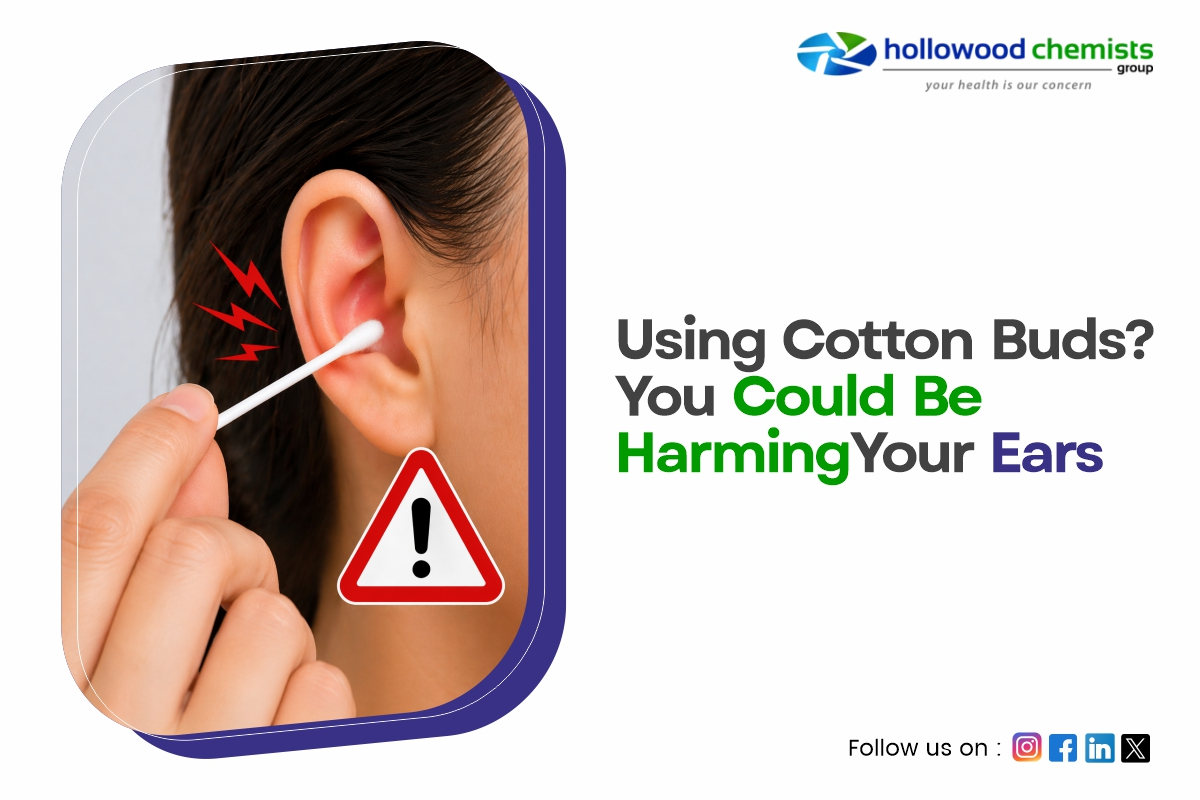
Cotton Buds Are Damaging Your Ears, Here’s What to Do Instead
It is one of those habits that feels completely harmless and makes your ears feel clean. You step out of the shower, reach for a cotton bud, and give your ears a quick clean. Millions of people in the UK do exactly this every day. The problem is, according to the NHS, ENT UK, and many other major hearing organisations in the country, it can do more harm than good.
This article explains why cotton buds cause more harm than good, what actually happens inside your ear canal when you use one, and, critically, what you should do instead if your ears feel blocked, itchy, or muffled.
Why Do People Use Cotton Buds to Clean Their Ears?
The answer is largely cultural. Earwax has long been perceived as something dirty, a sign that the ears need a good clean. Cotton buds are cheap, widely available, and packaged in a way that implies they are designed precisely for this purpose. When you run one around the entrance to your ear canal and pull it out coated in dark wax, it genuinely looks as though it has worked.
The reality is quite different. Earwax or cerumen is not a sign of dirtiness. It is a natural, protective secretion produced by glands in the outer ear canal. It traps dust and foreign particles, carries mild antibacterial properties, and lubricates the delicate skin lining of the canal. In most people, it migrates outwards on its own through the ordinary movement of the jaw whilst chewing and speaking. The ears are, in most circumstances, entirely self-cleaning. Interfering with that process does not help, it disrupts it. Ear Wax Removal service
The Hidden Dangers of Cotton Buds: What Really Happens Inside Your Ear
When a cotton bud is inserted into the ear canal, it does not scoop out wax, it compresses and pushes it deeper towards the eardrum. Hull University Teaching Hospitals NHS Trust is explicit in its patient guidance: cotton buds push wax further down the ear canal, leading to impaction, and the cotton portion of the bud can detach and lodge inside the canal, causing infection. Here is what can go wrong:
- Wax impaction. Rather than clearing blockages, cotton buds pack wax harder against the eardrum, making the build-up significantly more difficult to remove and transforming a minor issue into one requiring professional treatment.
- Eardrum perforation. The eardrum sits just 2.5 cm inside the ear canal, closer than most people realise. Inserting a cotton bud, particularly when distracted or startled, risks puncturing this delicate membrane. A perforated eardrum causes sharp pain, hearing loss, and can lead to serious middle-ear infections.
- Ear canal infection (otitis externa). Scratching the lining of the ear canal, even microscopically, creates entry points for bacteria and fungi. Guy’s and St Thomas’ NHS Foundation Trust identifies cotton bud use as a primary cause of otitis externa, the painful outer ear infection often called swimmer’s ear.
- Increased wax production. The ear’s response to foreign object intrusion is to produce more wax. Using cotton buds regularly can actually cause the very build-up you are trying to prevent.
- Cotton fibre retention. Fibres from the bud can detach and accumulate inside the canal, contributing to blockages, chronic irritation, and inflammation.
According to ENT UK and NHS data cited by Hearology, thousands of people in the UK require treatment every year for ear injuries caused by cotton buds, including scratched canals and perforated eardrums, with children and older adults at particular risk. It is why cotton bud packaging in the UK is required to carry the instruction: “do not insert into the ear canal.” Most people never read it.
Book an Ear Wax Removal Appointment at Hollowood Chemists
Ear Wax Removal Across North West England: Serving Your Community
If you are looking for ear wax removal near me in the North West UK, whether you need a walk-in ear wax removal pharmacy, a same-day earwax removal appointment, or want to find a private ear wax removal clinic without a lengthy NHS wait, Hollowood Chemists has you covered across the region.
We provide safe and effective microsuction earwax removal to patients across North West England, including:
- St Helens: Garswood, Heatons, Millfields, Haydock, Bradlegh
- Wigan: Moorside, Mesnes, Ince, Blackrod (Blackhorse)
- Bolton: Market
- Trafford: Sale, Ashton-upon-Mersey
- Northwich: Barnton
- Crewe: West Street
- Staffordshire: Clayton
Download the Complete List of Our Pharmacies
Safe and Effective Microsuction Ear Wax Removal: The Professional Solution
When professional earwax removal is required, microsuction is the method most widely recommended by audiologists and ENT specialists across the UK. It is a dry and highly precise procedure, performed under direct visualisation using a fine, low-pressure suction probe alongside an illuminated magnifying scope-eliminating the need for water and reducing uncertainty during treatment.
In the North West of England, Hollowood Chemists also offer private earwax removal services using microsuction, providing a safe, clinically guided option for patients seeking prompt and effective care.
Microsuction carries a wide eligibility range compared to other ear wax removal methods. Metal syringe method (ear syringing) was removed from NICE guidance in 2018 due to the risk of eardrum perforation and modern electronic ear irrigation still l cannot be used in patients with perforated eardrums or histories of ear surgery. With microsiction, the clinician sees the ear canal throughout, which means nothing is ever removed blindly.
Ear Wax Removal Aftercare
Following microsuction, mild temporary dizziness or a brief sense of canal sensitivity is normal and settles quickly. Keep the ear dry for 24 to 48 hours where possible, avoid swimming, and if you wear hearing aids, allow a short adjustment period as your hearing recalibrates. If you experience significant pain, ongoing dizziness, or any discharge after the procedure, contact your pharmacist or GP.
Professional Ear Care Without the Wait
Clinically safe microsuction by trained healthcare professionals, delivering trusted ear care across North West England.
What Should You Do Instead? Safe Alternatives for Ear Cleaning
For the vast majority of people, the ears simply do not need cleaning. However, if wax has built up and is causing symptoms such as muffled hearing, a sense of fullness, tinnitus, earache, or dizziness, then there are safe options to try at home before seeking professional care.
Step 1: Olive Oil Ear Drops
Medical-grade olive oil, available from any pharmacy as a spray or drop is the first-line recommendation from NHS Inform and BSW ICB commissioning guidance for softening ear wax.
Apply two to three drops or one to two sprays into the affected ear, twice daily, for up to two weeks. This softens and loosens the wax, helping the ear to expel it naturally. Sodium bicarbonate ear drops are also available and are effective at breaking down harder wax, though they should only be used for two to three weeks at a time as they can occasionally dry out the canal lining.
Step 2: Warm Water When Showering
Allowing a gentle flow of warm water from a shower into the outer ear whilst bathing can assist with natural wax migration. Never direct a pressurised jet into the canal. After washing, tilt your head to each side to allow water to drain, and let the ear dry naturally. Avoid inserting anything to dry the inside of the canal.
Step 3: Know When to Stop and Seek Help
If drops and warm water have not resolved your symptoms after two weeks, or if you have pain, discharge, or notable hearing loss, it is time for professional ear cleaning. Do not persist with home remedies beyond this point, and under no circumstances try ear candles. There is no clinical evidence they work, and they carry a genuine risk of burns.
Also Read: Ear Wax Removal and Hearing Health
Why Choose Hollowood Chemists for Earwax Removal?
At Hollowood Chemists, our trained pharmacists deliver microsuction ear wax removal as part of our dedicated ear wax removal service across North West England including St Helens, Wigan, Bolton, Sale, Northwich, Crewe and Staffordshire. Every appointment starts with a brief clinical review and video otoscope examination, so you can actually see the blockage on screen before treatment begins. The microsuction itself takes only a few minutes per ear and is, for the overwhelming majority of patients, entirely comfortable. In most cases, hearing improvement is immediate.
Our ear wax removal appointments do not require a GP referral, and same-day slots are often available. Whether you are a hearing aid user experiencing feedback and muffled sound, someone whose blocked ears have not responded to drops, or you simply want safe, fast ear cleaning from a qualified professional, we are here to help.
Frequently Asked Questions
Q1. Why are cotton buds bad for ears?
Cotton buds do not remove earwax, they push it deeper into the ear canal, risking impaction against the eardrum. They can also scratch the delicate canal lining, cause infection, perforate the eardrum, and trigger the ear to produce even more wax. Every major UK health body, including the NHS and ENT UK, advises against inserting cotton buds into the ear canal.
Q2. How do I remove earwax blockage fast?
For fast, safe relief, start with olive oil drops twice daily for up to two weeks. If that does not resolve the blockage, microsuction at a professional ear wax removal clinic such as Hollowood Chemists is the quickest and safest option, with same-day appointments often available across North West England.
Q3. Can earwax cause headaches?
Yes, indirectly. Pressure from impacted wax against the eardrum can produce referred pain that radiates to the jaw, temples, and across the head. If you are experiencing unexplained headaches alongside any ear symptoms, have your ears assessed by a pharmacist or GP before exploring other causes.
Q4. Is microsuction safe for ear wax removal?
Yes. Microsuction is widely regarded as the safest professional method for earwax removal available in the UK. It is a dry procedure performed under direct visualisation, making it the preferred choice for patients who cannot have water-based irrigation, including those with perforated eardrums, a history of ear surgery, or recurrent ear infections.
Q5. What drops are recommended for blocked ears?
Medical-grade olive oil spray (such as Earol) is the first-line NHS recommendation for softening ear wax. Sodium bicarbonate drops are also effective for harder wax. Neither should be used if you have a perforated eardrum. Ask your pharmacist if you are unsure which is appropriate for you.
Earwax Removal – Frequently Asked Questions
This article is for informational purposes only and does not constitute medical advice. Always consult a qualified healthcare professional before starting, stopping, or combining any medications.
-
- ENT UK / Hearology, Why Cotton Buds Don’t Belong in Your Ears
NHS Inform, Earwax Build-Up
BSW ICB, Microsuction Clinical Commissioning Policy
- ENT UK / Hearology, Why Cotton Buds Don’t Belong in Your Ears