
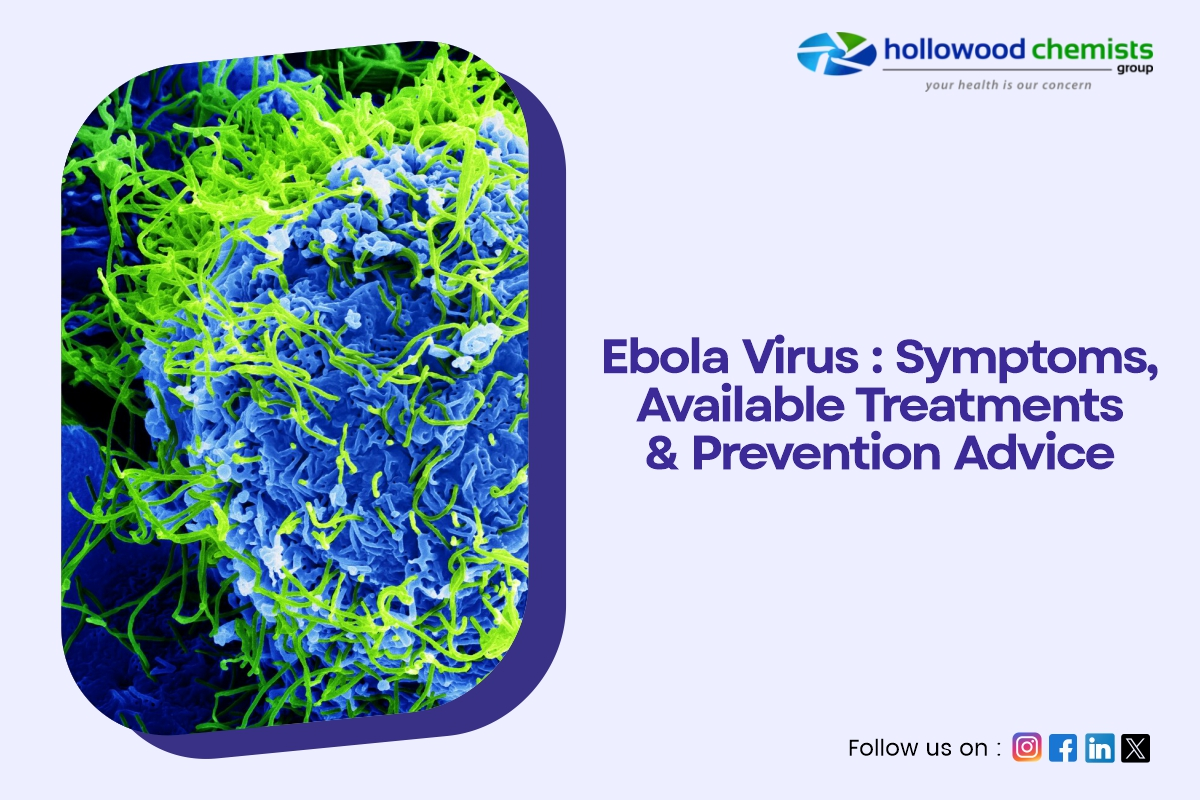
Ebola Virus: Symptoms, Prevention, Treatment & UK Travel Advice
Ebola virus disease (EVD) is a rare but severe and often fatal illness caused by infection with one of the Ebola virus strains. Recent WHO alerts and ongoing monitoring of outbreaks in Central Africa have renewed public concern about transmission risks and international travel safety. Whilst Ebola remains geographically limited, understanding its symptoms, transmission routes, and prevention methods is essential for UK residents, particularly those planning international travel to affected regions.
This guide covers everything you need to know about Ebola, including how it spreads, early warning signs, comparison with other viral diseases, and practical prevention steps. Many UK residents also seek guidance from trusted pharmacies such as Hollowood Chemists for travel health advice, vaccinations, and general infection-prevention support.
What Is Ebola Virus Disease (EVD)?
Ebola virus disease is a serious and often fatal illness in humans and other primates, caused by infection with one of the Ebola virus species. The condition is characterised by sudden onset of fever, intense weakness, muscle pain, and headache, followed by rash, vomiting, diarrhoea, impaired kidney function, and in some cases, internal and external bleeding.
Three major ebola virus species are known to cause large Ebola outbreaks:
- Ebola virus (EBOV)
- Sudan virus (SUDV)
- Bundibugyo virus (BDBV)
The average fatality rate is around 50%, although past outbreaks have ranged from 25% to 90% depending on healthcare access and outbreak management.
How Does Ebola Spread?
Ebola virus disease spreads through direct contact with the blood or body fluids of infected people or animals. According to WHO, the virus is believed to originate from infected animals, especially fruit bats, and can spread from person to person through close contact.
The virus enters the body through broken skin or mucous membranes such as the eyes, nose, or mouth.
Ebola Can Spread Through:
- Blood
- Vomit
- Urine
- Saliva
- Sweat
- Breast milk
- Semen
- Contaminated surfaces or objects
Because Ebola is highly infectious through direct contact, strict hygiene practices and proper protective equipment are essential for preventing transmission.
Key takeaway: Ebola requires direct contact with bodily fluids; it does not spread through casual contact alone.
Where Ebola Outbreaks Usually Occur
Ebola outbreaks have primarily occurred in remote villages in Central and West Africa, particularly in countries including Democratic Republic of the Congo, South Sudan, Uganda, Liberia, Guinea, and Sierra Leone. Zoonotic spillover events, where the virus jumps from infected animals (primarily fruit bats) to humans, typically trigger outbreaks.
Is Ebola Airborne?
No. Ebola is not airborne. The virus does not spread through air, water, or food prepared safely and cooked thoroughly. Ebola is not considered an airborne virus and does not spread in the same way as respiratory viruses such as COVID-19 or influenza. This is a crucial distinction that separates Ebola from illnesses like COVID-19 and influenza, significantly reducing transmission risk in healthcare and community settings.
Key takeaway: Ebola transmission requires direct contact with infected blood or bodily fluids, not airborne particles.
Early Symptoms of Ebola Virus
Common Early Warning Signs
Early Ebola symptoms typically appear between 2 to 21 days after exposure to the virus.
Initial symptoms include:
- Sudden onset of fever (38.3°C or higher)
- Severe fatigue and weakness
- Severe fatigue
- Muscle pain
- Headache and dizziness
- Nausea and vomiting
- Sore throat
These early signs can resemble flu or other febrile illnesses, making initial diagnosis challenging without specific testing.
Severe Ebola Symptoms
As the disease progresses, more severe symptoms develop:
- Rash on the skin (typically appearing between days 5–7)
- Impaired kidney function
- Impaired liver function
- Severe internal and external bleeding
( Blood in vomit or stool
Bleeding from gums or nose ) - Shock and multi-organ failure in severe cases
- Diarrhoea
Some patients may also experience confusion, aggression, or irritability due to nervous system involvement.
How Is Ebola Diagnosed?
Ebola virus disease is diagnosed through laboratory testing, as its symptoms can be similar to other infections such as malaria or typhoid. WHO-approved laboratory tests such as RT-PCR, antigen detection tests, and ELISA tests to confirm Ebola infection.
Because Ebola is highly infectious, all testing must be carried out under strict biosafety procedures.
How Long Does Ebola Take to Show Symptoms?
The incubation period – the time between infection and symptom onset – ranges from 2 to 21 days, with an average of 8 to 10 days. This window is critical for contact tracing and quarantine procedures, as individuals are generally not considered infectious until symptoms develop.
Key takeaway: Symptoms typically appear within 2–3 weeks of exposure; seek medical attention immediately if you develop fever after potential exposure.
How Dangerous Is Ebola Compared to COVID-19?
Ebola vs COVID-19 Transmission
Both Ebola and COVID-19 are viral diseases, but their transmission profiles differ significantly. COVID-19 spreads readily through respiratory droplets and aerosols, making it highly transmissible between individuals in close proximity. Ebola, conversely, requires direct contact with blood or bodily fluids, limiting spread to healthcare workers, family caregivers, and those in close physical contact with infected persons.
Fatality Rate Comparison
Ebola fatality rates range from 25% to 90% depending on the virus strain and quality of supportive care. COVID-19 fatality rates are considerably lower, typically 1–2% in well-resourced healthcare systems, though this varies by age and comorbidity.
The 2014–2016 West African Ebola epidemic resulted in approximately 11,000 deaths out of 28,000 cases, illustrating the severity of Ebola when medical infrastructure is limited. Despite its higher case fatality rate, Ebola’s non-respiratory transmission and limited geographic spread make it far less likely to cause global pandemics compared to respiratory viruses.
Which Virus Spreads Faster?
COVID-19 spreads significantly faster due to respiratory transmission, capable of infecting large populations within weeks. Ebola spreads more slowly, requiring direct contact and typically remaining geographically contained. This fundamental difference explains why COVID-19 became a global pandemic whilst Ebola outbreaks remain regional.
Key takeaway: Ebola is more severe but less contagious than COVID-19.
Ebola Compared With Other Serious Illnesses
Ebola vs COVID-19: Comprehensive Comparison
| Characteristic | Ebola Virus | COVID-19 |
| Transmission | Direct bodily fluid contact | Respiratory droplets/aerosols |
| Contagiousness | Low (direct contact required) | Very high (respiratory spread) |
| Incubation period | 2–21 days (avg 8–10) | 2–14 days (avg 5–6) |
| Case fatality rate | 25–90% (avg 50%) | 1–2% (well-resourced systems) |
| Geographical spread | Limited to endemic regions | Global pandemic capability |
| Spread velocity | Slow (contact-based) | Rapid (respiratory) |
| Healthcare workers risk | High (with exposure) | Moderate (with PPE) |
| Vaccine availability | Limited (Ervebo approved) | Widely available globally |
| Treatment | Supportive care + monoclonal antibodies | Antivirals + supportive care |
How to Prevent Ebola Virus Infection?
Preventing Ebola virus disease mainly involves maintaining strict hygiene, avoiding direct contact with infected body fluids, and isolating infected patients quickly. Early prevention measures play a major role in reducing the spread of the virus during outbreaks.
-
Hand Hygiene and PPE
Maintaining rigorous hand hygiene is the cornerstone of Ebola prevention. Regular handwashing with soap and water for at least 20 seconds, particularly after potential contact with body fluids, significantly reduces transmission risk.
Recommended personal protective equipment (PPE) Includes:
- Gloves
- Protective gowns
- Face masks or respirators
- Eye protection or face shields
-
Avoid Contact With Infected Body Fluids
Ebola spreads through direct contact with infected blood and body fluids. Even small amounts of contaminated fluid can transmit the virus if it enters the body through broken skin, the eyes, nose, or mouth.
Avoid Direct Contact With:
- Blood
- Vomit
- Saliva
- Sweat
- Semen
- Urine
- Breast milk
- Contaminated surfaces or medical equipment
-
Maintain Strict Hygiene Practices
Good hygiene practices play a critical role in preventing Ebola outbreaks in homes, hospitals, and communities.
Important Hygiene Measures Include:
- Wash hands frequently with soap and water
- Use alcohol-based hand sanitisers where appropriate
- Regularly disinfect surfaces and medical equipment
- Wear gloves when handling potentially contaminated materials
- Safely dispose of medical waste and contaminated clothing
-
Avoid High-Risk Exposure
Reducing exposure to high risk environments and infected individuals is essential during Ebola outbreaks.
Key Prevention Measures:
- Avoid handling ill or deceased persons without PPE
- Do not touch bats, monkeys, or other wildlife in endemic areas
- Avoid bushmeat and uncooked animal products
- Avoid direct contact with anyone showing Ebola symptoms
- Follow public health guidance during outbreaks
-
Avoid Raw or Undercooked Bushmeat
Ebola outbreaks are believed to sometimes begin through contact with infected wild animals.
Avoid Consuming:
- Raw bushmeat
- Undercooked meat from wild animals
- Bats
- Monkeys
- Primates from outbreak regions
Proper cooking and safe food handling practices are important for reducing potential exposure to zoonotic diseases.
Safe Food and Travel Practices
Consume thoroughly cooked meat and avoid bushmeat, particularly in endemic regions. Handle animal products with care and ensure proper food hygiene. Travellers should exercise vigilance when visiting areas with active Ebola transmission and follow UK Health Security Agency (UKHSA) travel advisories.
How Pharmacies Can Help With Prevention
UK travellers often visit Hollowood Chemists for travel-health support, vaccination guidance, and infection-prevention essentials before international travel. Pharmacists can assess travel risks, recommend appropriate preventive measures, provide antimalarial medication, and advise on safe hygiene practices.
Key takeaway: Prevention centres on avoiding direct contact with infected blood and bodily fluids through rigorous hygiene and cautious behaviour in endemic regions.
What Should You Do If You Have Ebola Symptoms?
If you think you may have Ebola:
- Isolate yourself immediately
- Avoid physical contact with others
- Contact emergency healthcare services
- Do not travel
- Wear a mask and protective clothing if possible
- Inform healthcare workers about travel history or exposure
When to Contact NHS 111 or a GP
If you develop fever and other symptoms following potential Ebola exposure, particularly after travel to endemic regions, contact NHS 111 immediately or your GP. Do not visit a hospital or medical facility in person without first alerting healthcare professionals. NHS 111 advisors will provide guidance on assessment and isolation protocols.
Self-Isolation Guidance
If Ebola is suspected, isolate yourself immediately to prevent transmission to household members. Maintain separate living areas, use dedicated toilets, and avoid sharing personal items. Wash all soiled clothing and linens at high temperature. Healthcare professionals will provide specific isolation instructions based on your circumstances.
Emergency Warning Signs
Seek emergency medical attention if you experience severe bleeding, difficulty breathing, shock, or multi-organ failure symptoms. Call 999 or attend an accident and emergency if life-threatening symptoms develop.
Key takeaway: Early medical contact and immediate isolation are critical if Ebola is suspected.
Ebola Treatment and WHO-Approved Vaccines
There is currently no universal cure for Ebola virus disease, but early treatment and supportive care can improve survival rates significantly.
Supportive Care Includes:
- IV fluids and rehydration
- Oxygen support
- Pain management
- Nutritional support
- Treatment of secondary infections
WHO also recommends monoclonal antibody treatments such as Inmazeb and Ansuvimab for Ebola virus disease caused by the EBOV strain.
WHO-Approved Ebola Vaccines:
- Ervebo
- Zabdeno and Mvabea
The Ervebo vaccine is recommended during Ebola outbreak response programmes, while additional vaccines are still under development for other Ebola virus strains.
Care for Ebola Survivors
Many survivors continue to experience long-term physical and psychological complications.
Read: Clinical care for survivors of Ebola virus disease
Possible Long-Term Effects
- Joint pain
- Vision problems
- Fatigue
- Anxiety
- Depression
- Neurological symptoms
WHO also notes that the virus may remain in certain body parts, including:
- Eyes
- Brain
- Testicles
Ebola virus transmission through semen has been documented for up to 15 months after recovery. WHO recommends semen testing and safer sex practices for male survivors.
Safe Travel Practices for Endemic Regions
Pre-Travel Preparation:
Before travelling to Ebola-endemic areas, consult Fit for Travel or your GP for destination-specific risk assessment. Many UK residents visit Hollowood Chemists for:
- Pre-travel health consultations
- Recommended vaccinations
- Antimalarial prophylaxis if indicated
- PPE supplies and hygiene products
- Post-travel health advice
During Travel:
- Maintain meticulous hand hygiene (wash frequently with soap/water)
- Avoid healthcare facilities unless absolutely necessary (higher viral transmission risk)
- Avoid crowds and large social gatherings
- Practise respiratory hygiene (cough etiquette, though Ebola is not airborne)
- Maintain physical distance from persons displaying fever or illness
- Avoid contact with animals, particularly in rural areas
Key Summary and Health Recommendations
Ebola virus disease remains a severe public health threat in Central and West Africa, with case fatality rates of 25–90% depending on virus strain and healthcare access. However, UK residents face minimal risk due to geographic isolation, strong healthcare infrastructure, and non-airborne transmission routes.
Essential facts:
- Ebola requires direct bodily fluid contact – not airborne
- Early supportive care significantly improves outcomes
- Prevention through behaviour (avoiding animal contact, bushmeat, unsafe practices) is highly effective
- Vaccines available for occupational risk groups
- Post-travel monitoring essential for 21 days if visiting endemic regions
For UK travellers to endemic areas: Consult Fit for Travel and travel health clinics 4–6 weeks pre-travel. Visit Hollowood Chemists for travel vaccinations, antimalarial prescriptions, and hygiene supplies. Upon return, monitor health for 21 days and seek immediate medical evaluation if fever develops.
Frequently Asked Questions About Ebola
Q.1 Can Ebola spread through the air?
No, Ebola does not spread through air, water, or food. The virus requires direct contact with blood or body fluids of an infected person. This is why careful hand hygiene and PPE in healthcare settings effectively prevent transmission.
Q.2 Is Ebola curable?
There is no specific cure for Ebola. Treatment focuses on providing supportive care, maintaining fluid balance, oxygen levels, blood pressure, and treating complications as they arise. Early supportive care significantly improves survival rates.
Q.3 Is there an Ebola vaccine?
Yes. The rVSV-ZEBOV vaccine (Ervebo) is currently approved in several countries, including the UK, for vaccination against Ebola. The vaccine is primarily recommended for healthcare workers and those at occupational risk in endemic regions.
Q.4 Can Ebola reach the UK?
Ebola is unlikely to become established in the UK due to strong healthcare infrastructure, infection-control protocols, and geographic isolation from endemic areas. However, imported cases may occur in returning travellers, requiring swift detection and isolation procedures. The NHS and UKHSA maintain surveillance and response systems for such scenarios.
Q.5 What countries currently have Ebola cases?
Ebola outbreaks are primarily reported in Central and West African nations, including Democratic Republic of the Congo, Uganda, and South Sudan. For current outbreak information, consult the WHO and Fit for Travel (NHS travel health service).
Q.6 What precautions should travellers take for Ebola?
Before travelling to endemic regions, consult Fit for Travel or your GP for destination-specific advice. Practise rigorous hand hygiene, avoid handling animals and bushmeat, and seek immediate medical attention if fever develops. Many people consult pharmacies such as Hollowood Chemists for travel vaccinations and health guidance before international travel.
Q.7 Is Ebola curable?
No specific cure exists for Ebola. However, early supportive medical care significantly improves survival rates. With modern intensive supportive care, including IV fluid management, oxygen therapy, blood transfusions, and treatment of complications, survival rates can exceed 60%. Emerging monoclonal antibody therapies show promise when given early in disease courses.
Q.8 What precautions should travellers take?
Essential precautions for travellers to endemic regions:
- Avoid all animal contact, particularly bats, primates, and bushmeat
- Consume only thoroughly cooked food
- Maintain meticulous hand hygiene
- Avoid hospitals unless absolutely necessary
- Practise respiratory hygiene (though Ebola is not airborne)
- Monitor temperature daily
- Seek medical evaluation immediately if fever develops
- Consult Fit for Travel or your GP pre-travel
- Visit Hollowood Chemists for travel health assessment, vaccinations, and supplies.
Source Link:
- World Health Organization (WHO). Ebola virus disease. Health topic overview. Available at: https://www.who.int/en/health-topics/ebola/ebola
- UK Health Security Agency (UKHSA) . Infectious disease guidance and surveillance. Available at:
https://www.gov.uk/government/publications/ebola-overview-history-origins-and-transmission/ebola-overview-history-origins-and-transmission - NHS UK . Ebola virus disease. Available at: https://www.nhs.uk/conditions/ebola/
- UK Government Department of Health and Social Care. Public health preparedness for emerging infectious diseases. Policy guidance. Available at: https://www.gov.uk/government/organisations/department-of-health-and-social-care
- Medicines and Healthcare products Regulatory Agency (MHRA). Ervebo vaccine approval and guidance. Product information. Available at: https://www.gov.uk/government/organisations/medicines-and-healthcare-products-regulatory-agency
- National Institute for Health and Care Excellence (NICE) . Infectious disease management guidance. Clinical guidelines. Available at: https://www.nice.org.uk
Disclaimer:
This article is for informational purposes only. Always consult your GP, NHS 111, or a qualified healthcare professional before making any decisions about your health or suspected Ebola symptoms. If you suspect you have Ebola, seek emergency medical attention immediately. Travellers should always check the latest UK Fit for Travel and FCDO guidance before visiting affected regions.