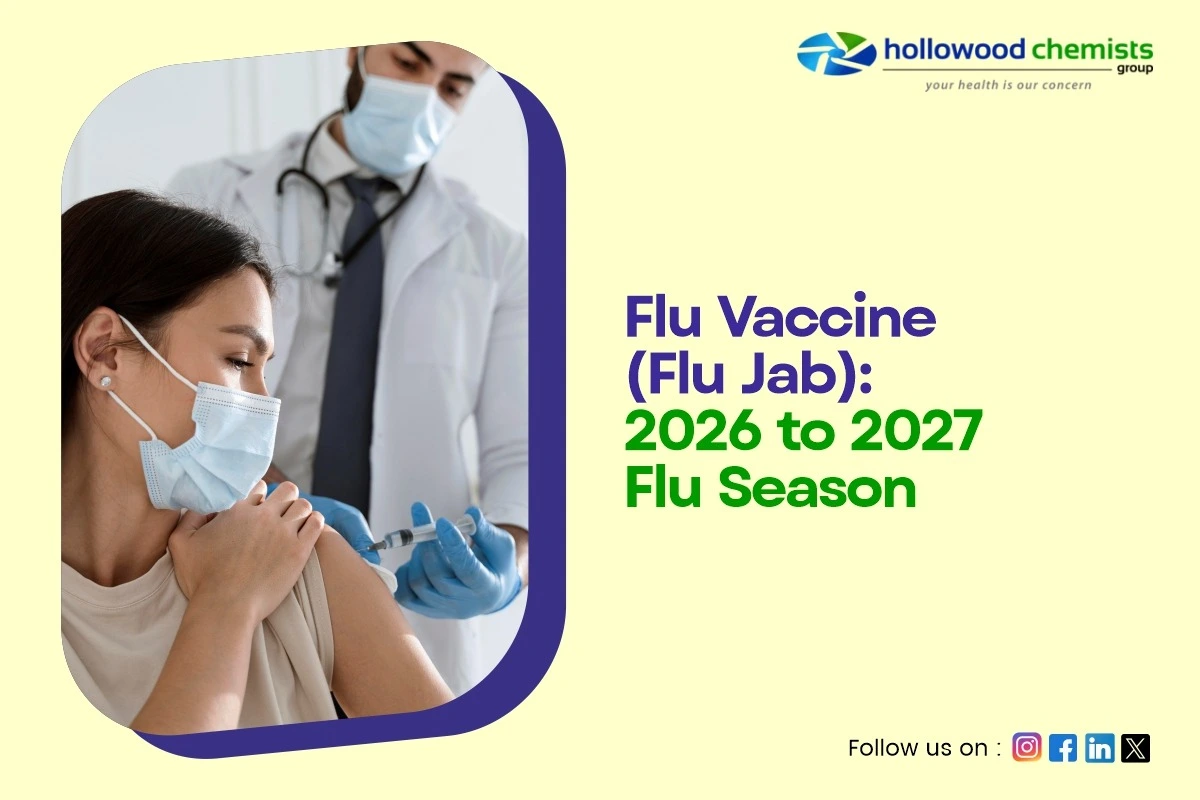
Flu Vaccine (Flu Jab): 2026 to 2027 Flu Season
The NHS flu vaccine for the 2026–2027 flu season is available from 1 September 2026 for pregnant women and eligible children, and from 1 October 2026 for most eligible adults. The flu vaccine is updated every year to protect against the influenza strains most likely to circulate during winter, helping reduce the risk of serious illness, hospitalisation, and flu-related complications.
Why You Should Get the Flu Vaccine This Winter
Many people think of flu as a bad cold, but influenza is a serious respiratory infection that can develop suddenly and leave you feeling extremely unwell. It can cause a high temperature, muscle aches, exhaustion, and a persistent cough, and for some people, it can lead to complications such as pneumonia, bronchitis, and worsening of existing health conditions.
The flu virus changes every year, which is why the vaccine is updated annually. Even if you had a flu jab last winter, you’ll need the 2026–2027 flu vaccine to help protect against this season’s circulating strains.
For people who are older, pregnant, or living with long-term health conditions, vaccination remains one of the most effective ways to reduce the risk of serious illness during the winter months.
What’s New for the 2026–2027 Flu Season?
The 2026–2027 NHS flu vaccination programme continues to focus on protecting people most at risk while improving access through community pharmacies and schools.
Key updates this season include:
- Adults aged 65 and over, pregnant women, eligible children and people with certain long-term health conditions continue to be eligible for NHS flu vaccination.
- The children’s vaccination programme continues through schools and GP practices.
- Community pharmacies are expanding their role in vaccinating eligible children aged 2-3 years old, 2-18 years old in clinical risk groups and catch up offers for eligible school-aged children.
- All recommended vaccines for this season are trivalent influenza vaccines, updated to match the 3 influenza strains expected to circulate during winter.
- Rough sleepers and people using homeless hostels or night shelters aged 16 and over have been added to the national flu vaccination programme.
These updates aim to make flu vaccination more accessible while ensuring patients receive vaccines that provide the most appropriate protection for their age and risk group.
Who Can Get the Free NHS Flu Vaccine in 2026–2027?
One of the most searched questions every year is:
Who qualifies for the NHS flu vaccine?
The NHS offers free flu vaccination to people who are at higher risk of becoming seriously ill from influenza.
From 1 September 2026
The following groups become eligible from September:
- Pregnant women.
- Children aged 2 or 3 years on 31 August 2026.
- Primary school children (Reception to Year 6).
- Secondary school children (Years 7–11).
- Children aged 6 months to under 18 years who are in clinical risk groups.
From 1 October 2026
Most eligible adults can receive their flu jab from October, including:
- Adults aged 65 years and over (including those turning 65 by 31 March 2027).
- Adults aged 18–64 with certain long-term health conditions.
- Residents of long-stay care homes.
- Eligible carers.
- Close contacts of people with weakened immune systems.
- Eligible frontline social care workers.
- Rough sleepers and people using homeless hostels or night shelters aged 16 years and over
When Should You Book Your Flu Jab?
Timing is important because it takes around 10 to 14 days for your body to build protection after vaccination.
NHS Flu Vaccine Timeline
| Date | Who Can Be Vaccinated |
| 1 September 2026 | Pregnant women and eligible children |
| 1 October 2026 | Most eligible adults |
| By end of November | Most eligible people should ideally have been vaccinated |
| Later in winter | Vaccination remains available for eligible people who have not yet received it |
Getting vaccinated early in the autumn helps ensure you’re protected before the flu begins circulating more widely during winter.
Which Flu Vaccine Will You Receive?
The NHS doesn’t offer exactly the same vaccine to everyone. Instead, the vaccine is selected according to your age and risk group, following advice from the Joint Committee on Vaccination and Immunisation (JCVI).
Flu vaccines
Flu vaccines available for the 2026 to 2027 season
| Vaccine | Manufacturer | Licensed from age |
| Cell-based trivalent influenza vaccine (IIVc), egg free | CSL Seqirus | 6 months of age |
| Vaxigrip, (IIVe) | Sanofi | 6 months of age |
| Removed | ||
| Fluenz (LAIV) | AstraZeneca | 2 years to less than 18 years of age |
| Supemtek TIVr (IIVr), egg free | Sanofi | 18 years of age |
| Adjuvanted trivalent influenza vaccine (aIIV) | CSL Seqirus | 50 years of age |
| Efluelda TIV-HD (IIV-HD) | Sanofi | 60 years of age |
Adults aged 65 and over
People aged 65 and over may receive one of several preferred vaccines, including:
- Adjuvanted inactivated influenza vaccine (aIIV)
- Cell-cultured inactivated influenza vaccine (IIVc)
- High-dose inactivated influenza vaccine (IIV-HD)
- Recombinant influenza vaccine (IIVr)
Adults aged 18–64 in Clinical Risk Groups
Most eligible adults under 65 receive either:
- Cell-cultured influenza vaccine (IIVc)
- Recombinant influenza vaccine (IIVr)
Children
Most children aged 2–17 years receive the nasal spray flu vaccine (LAIV). If this isn’t suitable, for example, because of certain medical conditions or other considerations, they may be offered an alternative injected vaccine.
Child Flu Vaccine: What Parents Should Know
Many parents are surprised to learn that most children receive the flu vaccine as a quick nasal spray rather than an injection.
The nasal spray vaccine is commonly offered through schools, GP practices and, in some circumstances, participating community pharmacies for eligible children.
Why vaccinating children matters
Children can spread flu easily, even if they recover quickly themselves. Vaccinating children helps protect:
- vulnerable family members
- grandparents
- babies
- people with weakened immune systems
By reducing transmission, childhood vaccination benefits the wider community as well.
Can You Get Your Flu Vaccine at a Pharmacy?
Yes. Many eligible adults can receive their NHS flu vaccine at a participating community pharmacy instead of visiting their GP.
Pharmacy vaccination offers several advantages:
- convenient appointments
- shorter waiting times
- accessible local healthcare
- professional vaccination from trained pharmacy teams
Community pharmacies are also expanding their role in vaccinating eligible children during the 2026–2027 season.
Why Choose Hollowood Chemists for Your Flu Jab?
At Hollowood Chemists, we make protecting yourself against seasonal influenza simple and convenient. Our experienced pharmacy team provides trusted, professional flu vaccination services designed to help eligible patients stay protected throughout the winter months.
When you visit Hollowood Chemists, you can expect:
- professional vaccination from trained pharmacy staff
- convenient appointments at selected branches
- advice on flu prevention and winter health
- guidance on eligibility and NHS flu vaccination
- support before and after your vaccination
As a GPhC-registered pharmacy, we’re committed to delivering safe, evidence-based healthcare across North West England.
Travelling This Winter? Don’t Forget Travel Vaccinations
If you’re travelling abroad during autumn or winter, protecting yourself may involve more than just the flu vaccine.
Depending on your destination, you may need:
- travel vaccinations
- malaria prevention advice
- insect bite prevention guidance
- destination-specific health recommendations
At Hollowood Chemists, our travel vaccination service helps you prepare for your trip with personalised advice based on where you’re travelling and your individual health needs.
Planning ahead allows enough time for vaccines that may require multiple doses before departure.
Where to Find Hollowood Chemists in North West England
Hollowood Chemists proudly supports communities across North West England with accessible pharmacy services, including flu vaccination and travel health advice.
Our locations include:
- St Helens
- Wigan
- Bolton
- Crewe
- Trafford
- Northwich
- Staffordshire
Whether you’re looking for an NHS flu vaccine, flu jab near me, or travel vaccination advice, our pharmacy team is here to help.
Why Choose Hollowood Chemists?
- GPhC-registered pharmacy providing trusted healthcare services.
- Convenient flu vaccination appointments.
- Professional advice on seasonal influenza and winter health.
- Travel vaccination support for overseas trips.
Friendly pharmacy teams across North West England.
Frequently Asked Questions
1. Who can get the free NHS flu vaccine in 2026–2027?
The NHS flu vaccine is available for eligible groups, including adults aged 65 and over, pregnant women, people with certain long-term health conditions, eligible carers, residents of care homes and eligible children.
2. When does the 2026–2027 flu vaccination programme start?
Pregnant women and eligible children can begin receiving the vaccine from 1 September 2026, while most eligible adults can receive their flu jab from 1 October 2026.
3. Can I get my flu jab at a pharmacy?
Yes. Many eligible adults can receive their NHS flu vaccine at participating community pharmacies, making vaccination more convenient than waiting for a GP appointment.
4. Can the flu vaccine give you flu?
No. Injected flu vaccines do not contain live influenza virus and cannot give you flu. The children’s nasal spray contains weakened influenza viruses, but these are designed not to cause flu in vaccinated children.
5. Why do I need a flu vaccine every year?
The influenza virus changes regularly, and the vaccine is updated each season to protect against the strains most likely to circulate during winter.